Brown Fused Alumina for Sandblasting: The Economical Blasting Guide
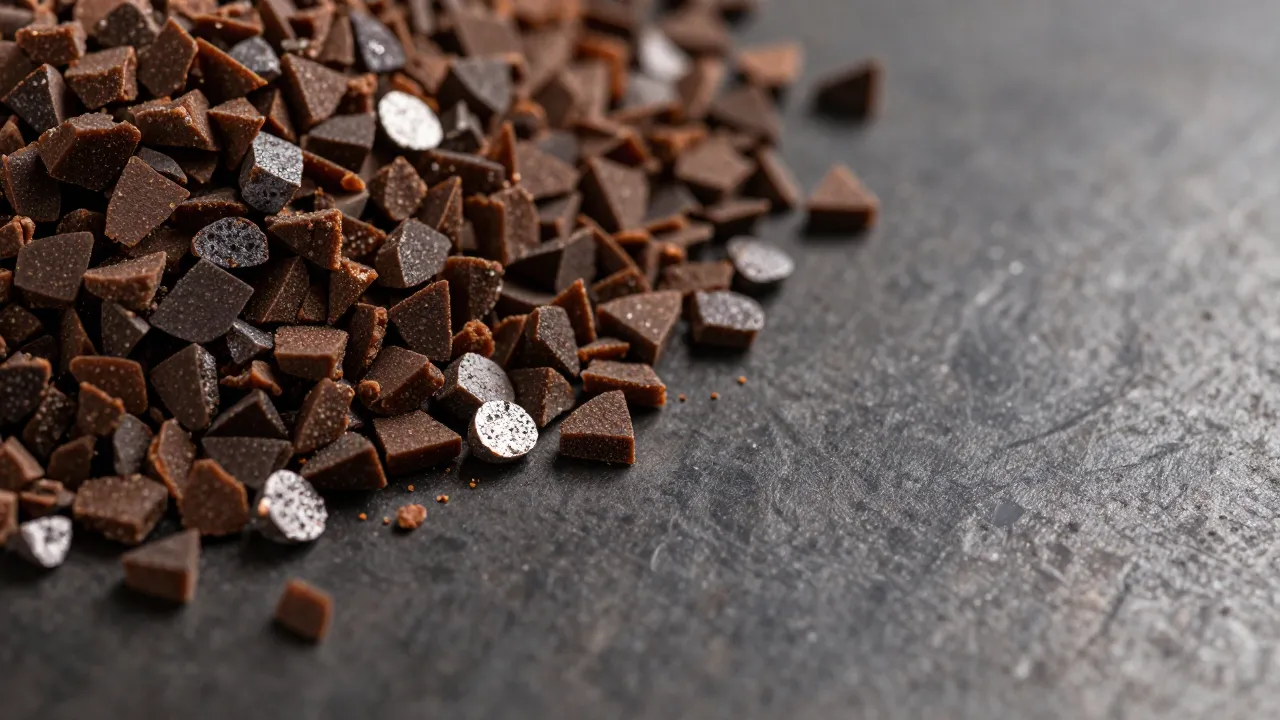
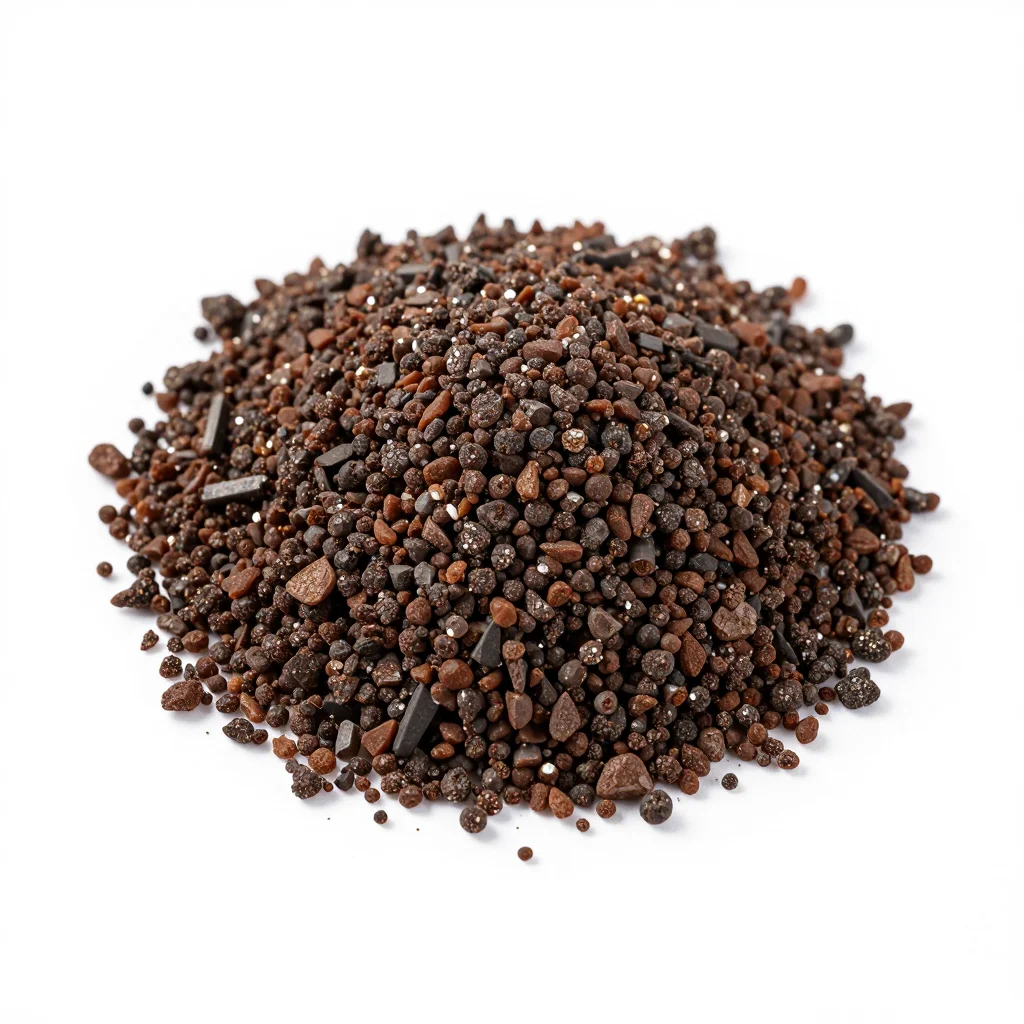
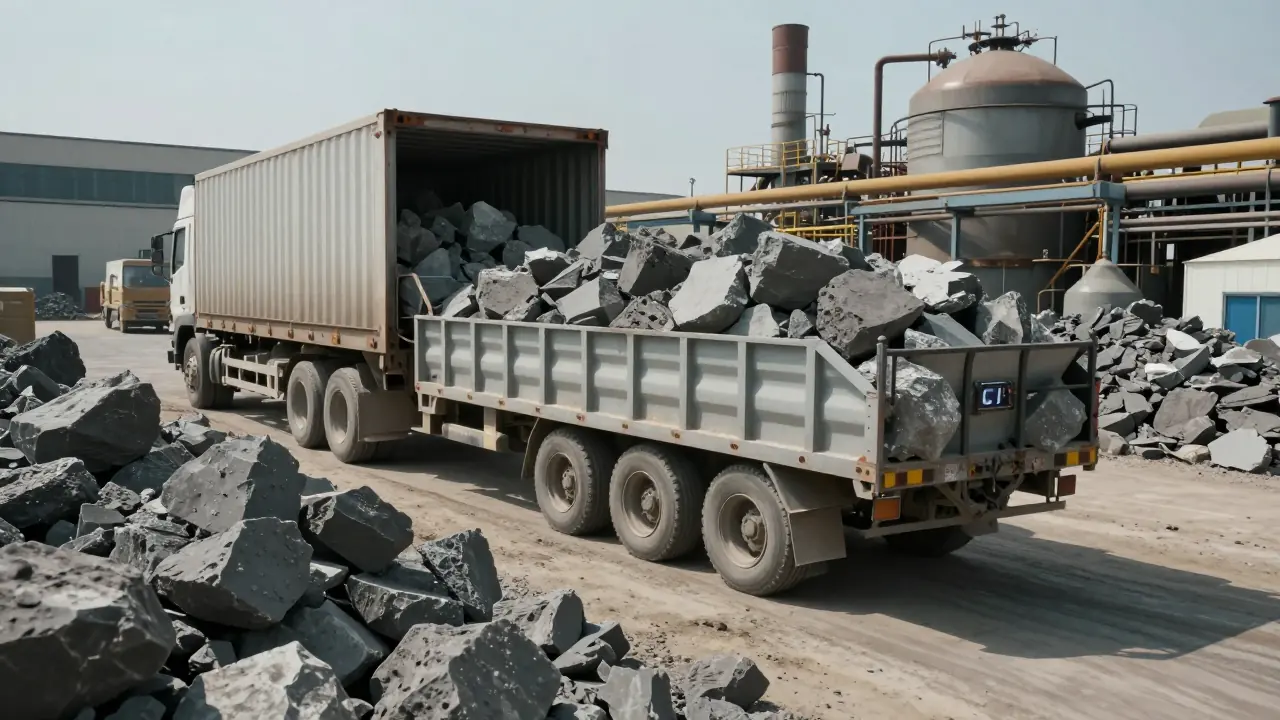
When abrasive blasting operations need a tough, cost-effective media that can handle heavy rust removal, mill scale, and old coatings on carbon steel without breaking the budget, brown fused alumina (BFA) is the standard choice. Shipyards, bridge maintenance crews, structural steel fabricators, and foundries all rely on BFA as their workhorse blast media.
This buyer’s guide covers everything you need to know about using BFA for abrasive blast cleaning: grit size selection, surface profile data, cost optimization (including recyclability), equipment considerations, and purchasing specifications. If you are currently using garnet, slag, or white fused alumina for carbon steel work, the cost comparison data in this guide may help you optimize your blasting budget.
Why Brown Fused Alumina for Sandblasting?
BFA’s advantages as a blast media come directly from its material properties and cost position:
- Mohs 9 hardness: Same hardness as white fused alumina — cuts aggressively through rust, mill scale, and tough coatings
- Tough, durable grain: TiO₂ content (1.5–3.8%) acts as a toughening agent, giving BFA grains superior impact resistance and longer life compared to more friable media
- Recyclable 8–10 cycles: Dense grain (bulk density 1.65–1.90 g/cm³) stays in the blast stream and can be reused multiple times in closed-circuit systems
- 50–70% of WFA cost: Significantly more economical than white fused alumina for applications where purity is not critical
- Al₂O₃ ≥95%: High aluminum oxide content ensures consistent cutting performance across production lots
- Angular grain shape: Produces a sharp, uniform anchor profile ideal for coating adhesion on structural steel
Compared to common blast media alternatives:
| Blast Media | Hardness | Ferrous Risk | Recyclability | Relative Cost |
|---|---|---|---|---|
| Brown fused alumina | Mohs 9 | Yes (low) | 8–10 cycles | Low |
| White fused alumina | Mohs 9 | None | 8–10 cycles | Moderate |
| Garnet | Mohs 7.5–8 | None | 1–3 cycles | Low–Moderate |
| Steel grit | Mohs 6–7 | Yes (high) | 100+ cycles | Low |
| Copper slag | Mohs 6–7 | Trace | 1 cycle | Very low |
| Glass bead | Mohs 5.5 | None | 1–3 cycles | Low |
BFA occupies a unique position: harder and more recyclable than garnet and slag, significantly cheaper than WFA, and tough enough to withstand impact fracture better than any other fused mineral at its price point.
The Critical Limitation: Carbon Steel Only
BFA is not suitable for stainless steel or non-ferrous metals. The titanium and trace iron in BFA can embed in the substrate surface, causing pinpoint rust bloom on stainless steel within days of moisture exposure. For stainless steel, aluminum, titanium, and other non-ferrous applications, use white fused alumina instead — it is iron-free and will not contaminate the surface.
For carbon steel — structural beams, ship hulls, bridge components, storage tanks, pipe exteriors, and general fabrication — BFA delivers the best combination of cutting speed, recyclability, and cost.
Grit Size Selection Guide
Choosing the right grit size is critical. Too coarse and you create an unnecessarily deep anchor profile that wastes coating material; too fine and you fail to achieve the required cleanliness and surface profile for proper coating adhesion.
| Application | Recommended FEPA Grade | Anchor Profile | Notes |
|---|---|---|---|
| Heavy rust/scale removal | F16–F24 | 100–150 μm | Maximum cutting speed for heavily corroded steel |
| General structural steel (Sa 2.5) | F30–F46 | 50–100 μm | Standard for coating preparation on bridges, ships, tanks |
| Medium cleaning / mill scale | F46–F60 | 37–75 μm | Good balance of cut rate and surface finish |
| Light cleaning / thin coatings | F60–F80 | 25–50 μm | Controlled profile for thinner coating systems |
| Fine finishing / etch | F100–F120 | 12–25 μm | Light etch before painting or overlay |
Carbon Steel Surface Preparation
For structural steel prepared to ISO 8501-1 Sa 2.5 (near-white blast cleaning) or SSPC-SP 10, BFA in F30–F46 is the industry standard. The angular grain produces a sharp anchor profile of 50–100 μm, which provides excellent mechanical adhesion for epoxy, polyurethane, zinc-rich primers, and other high-performance industrial coating systems.
For heavily corroded steel requiring Sa 3 (white metal blast cleaning), start with F16–F24 for the first pass to remove heavy scale, then switch to F30–F46 for the final surface profile.
Thin-Gauge and Light Fabrication
When blasting thinner steel sections (under 6 mm), use F60–F80 at reduced pressure (50–70 PSI) to avoid warping from excessive impact energy. The finer grit still achieves the required cleanliness without distorting the substrate.
BFA vs Other Blast Media: Cost Analysis
The purchase price per kilogram tells only part of the story. Total blasting cost per square meter depends on media consumption rate, recyclability, and disposal costs. Here is how BFA compares to the most common alternatives for carbon steel blasting:
Recyclability: The Cost Multiplier
BFA typically achieves 8–10 reuse cycles in closed-circuit blast systems (pressure vessels with reclaimers or wheelblast machines). Tougher BFA grades with higher TiO₂ (2.5–3.8%) tend toward the upper end of this range because the titanium-toughened grains resist impact fracture better than lower-TiO₂ grades.
By comparison:
- Garnet: 1–3 cycles. The softer mineral fractures quickly against steel, producing dust rather than reusable grain.
- Copper slag: 1 cycle. Single-use only — high disposal volume and cost.
- Steel grit: 100+ cycles. Far more recyclable than any mineral media, but the ferrous contamination risk limits its use.
Cost-Per-Square-Meter Calculation
To estimate your actual blasting cost:
- Determine media consumption rate for your grit size and pressure (kg/m²)
- Divide by the number of reuse cycles (8–10 for BFA)
- Multiply by media cost per kg
- Add disposal cost for spent media and dust
For a typical structural steel project, BFA’s effective media cost per square meter is typically 40–60% lower than garnet despite BFA’s higher per-kg price, because BFA’s 8–10 reuse cycles dramatically reduce the media consumption rate versus garnet’s single-use economics.
When BFA Beats WFA on Cost
For carbon steel blasting where ferrous contamination is not a concern, BFA delivers equivalent hardness and cutting performance at roughly 50–70% of WFA’s cost. The cost savings multiply across large projects — a shipyard consuming 500 tons of blast media annually can save $150,000–250,000 by specifying BFA instead of WFA for carbon steel work.
For applications requiring the highest purity, see our complete WFA vs BFA comparison for detailed guidance on when to choose each.
Equipment Considerations
Blast Pressure
- Heavy carbon steel (rust/scale): 80–100 PSI (5.5–7 bar)
- General structural steel: 70–90 PSI (5–6 bar)
- Light-gauge steel (<6 mm): 50–70 PSI (3.5–5 bar)
- Sheet metal / thin sections: 40–60 PSI (2.5–4 bar)
Higher pressure increases cutting speed but accelerates grain breakdown, reducing the number of reuse cycles. For maximum media life, use the lowest pressure that achieves the required cleaning rate.
Nozzle Selection
Venturi nozzles (boron carbide or tungsten carbide) are standard for production blast cleaning with BFA:
- Use a nozzle diameter 3–4× the grit size for optimal acceleration and flow
- Monitor nozzle wear: replace when the orifice diameter increases 1.5× from new — a worn nozzle reduces blast velocity, increasing media consumption and cycle time
- Boron carbide nozzles last 5–10× longer than tungsten carbide with BFA, offsetting their higher purchase price
Dust Collection
BFA generates less dust than slag media and garnet due to its higher density and tougher grain. However, proper dust collection remains essential:
- Use a cartridge-type dust collector rated for fine particulate (≤5 μm)
- Maintain air velocity at 3,500–4,500 ft/min in the ductwork to prevent dust settlement
- BFA dust is generally classified as non-hazardous nuisance dust — consult local regulations for disposal requirements
Purchasing Specifications
When sourcing BFA for blast cleaning, specify the following parameters to ensure consistent, predictable performance:
Specification Checklist
- Al₂O₃ ≥95% — the primary quality indicator; ≥96% for premium grades
- TiO₂ 2.5–3.8% — tougher grain preferred for blasting; specify the narrow range for consistent cycle life
- Fe₂O₃ ≤0.1% — lower is better even for carbon steel (minimizes contamination risk)
- SiO₂ ≤1.5% — affects dust generation and refractory performance
- Bulk density 1.65–1.90 g/cm³ — impacts flow characteristics in blast equipment
- FEPA grit size designation — request particle size distribution (PSD) analysis for verification
- Moisture content ≤0.5% — moisture causes clumping and bridging in blast pots
- Magnetic material ≤0.05% — ensures minimal free iron contamination
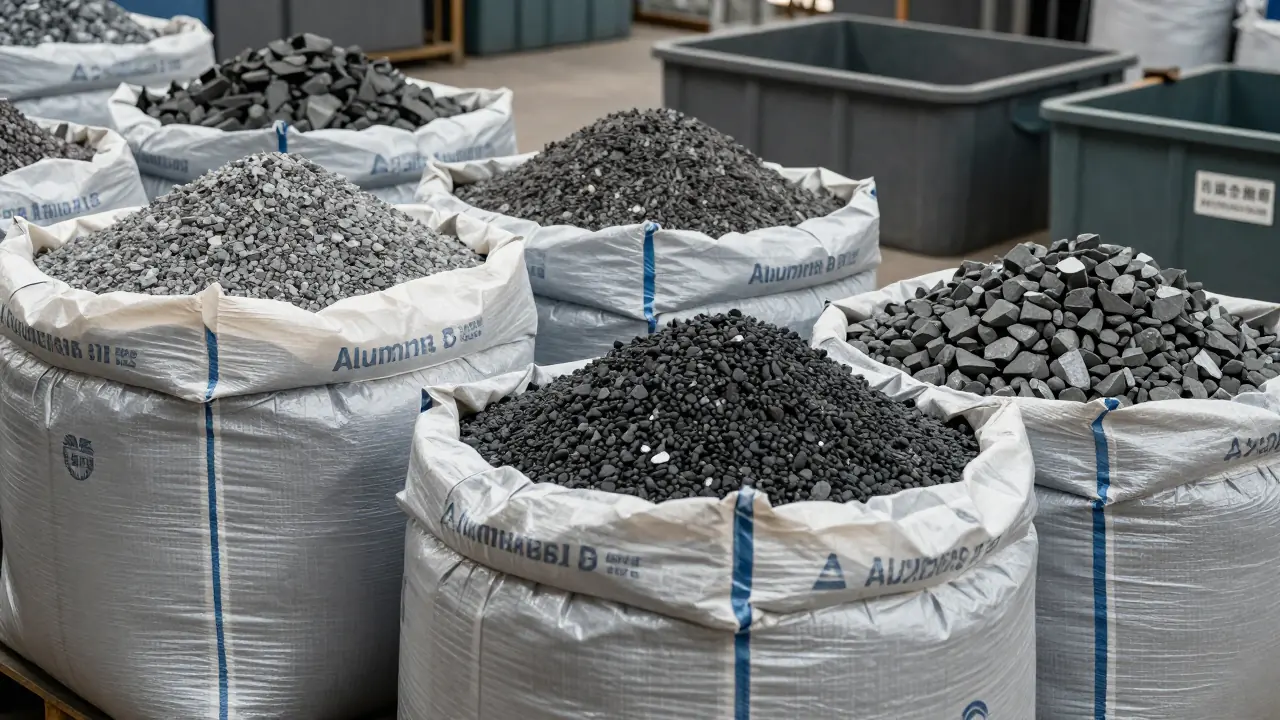
Packaging Options
- 25 kg multi-wall paper bags (standard for most blast operations)
- 1-ton FIBC jumbo bags (cost-effective for high-volume users)
- Bulk pneumatic tanker (for the largest operations with silo storage)
Quality Pitfalls to Watch For
- Undersized grain blending: Some suppliers blend fines into nominally coarse grit to increase weight. This reduces cutting efficiency and increases dust. Always request and review the PSD — not just the nominal grit size.
- Inconsistent TiO₂: TiO₂ variation between production lots causes inconsistent grain toughness and unpredictable cycle life. Specify a TiO₂ range (e.g., 2.5–3.5%) and request per-lot COAs.
- Moisture-contaminated material: Wet BFA clumps, bridges in blast pots, and causes uneven feed. Verify sealed, moisture-proof packaging with inner polyethylene liners.
- Excess free iron: Inadequate magnetic separation during processing leaves free iron particles that can contaminate the blasted surface. Specify magnetic material ≤0.05% and test incoming lots.
For more on quality verification, see our quality control guide for fused minerals.
Frequently Asked Questions
How does BFA compare to garnet for carbon steel blasting?
BFA is harder (Mohs 9 vs. 7.5–8), cuts faster, and can be recycled 8–10 times versus garnet’s 1–3 uses. While garnet costs less per kg, BFA’s recyclability typically results in 40–60% lower total media cost per square meter for closed-circuit blast systems. For open-nozzle blasting where recycling is not feasible, garnet may have a cost advantage.
Can I use BFA on stainless steel?
No. BFA contains titanium (1.5–3.8% TiO₂) and trace iron that can embed in stainless steel surfaces and cause pinpoint rust bloom (pitting corrosion). For stainless steel, use white fused alumina which is ≥99.5% Al₂O₃ with virtually zero iron content.
What blast pressure should I use for BFA?
For heavy carbon steel: 80–100 PSI. For general structural steel: 70–90 PSI. For light-gauge steel under 6 mm: 50–70 PSI to avoid warping. Lower pressure extends grain life — use the minimum pressure that achieves your required cleaning rate and surface profile.
How do I know when BFA blast media is spent?
Monitor your cleaning rate. When the area cleaned per minute drops below 70% of the initial rate with fresh media, the grains have fractured below the usable size. In closed-circuit systems with reclaimers, fines are automatically separated — maintain proper reclaimer settings and periodically test the working mix for PSD to verify the reclaimer is performing correctly.
How does BFA compare to WFA for blast cleaning?
BFA and WFA share the same hardness (Mohs 9) and similar recyclability (8–10 cycles). The key differences: WFA is ≥99.5% Al₂O₃ and iron-free, making it safe for stainless steel and non-ferrous metals. BFA contains TiO₂ and trace iron at roughly 50–70% of WFA’s cost. For carbon steel, BFA is the economical choice. For stainless or non-ferrous, WFA is required. See our full WFA vs BFA comparison for detailed data.
What packaging is available for BFA blast media?
Standard packaging includes 25 kg multi-wall paper bags (with moisture-resistant inner liners), 1-ton FIBC jumbo bags, and bulk pneumatic tanker delivery for operations with silo storage. For export shipments, jumbo bags on pallets with shrink wrap are standard. Specify moisture-proof packaging if your operation is in a humid environment.
Ready to Source BFA for Sandblasting?
Brown fused alumina delivers the hardness, recyclability, and cost-efficiency that professional blast cleaning operations demand. Whether you are preparing structural steel for a bridge project, cleaning ship hulls, or maintaining storage tanks, BFA provides consistent surface profiles and low total cost per square meter.
Request a BFA sandblasting quote — we supply FEPA grit sizes from F16 to F120 in 25 kg bags and jumbo bags, with per-lot COAs verifying Al₂O₃ content, TiO₂ range, bulk density, and particle size distribution.