Boron Carbide: Properties, Grades & Industrial Applications
After diamond and cubic boron nitride, boron carbide (B4C) is the third hardest material known — and for many industrial applications, it is the most practical choice. Its combination of extreme hardness, low density, and neutron absorption capability makes it irreplaceable in sectors ranging from ballistic armor to nuclear reactor control. This guide covers the essential properties, available grades, and what procurement teams need to know when sourcing boron carbide.
What Is Boron Carbide?
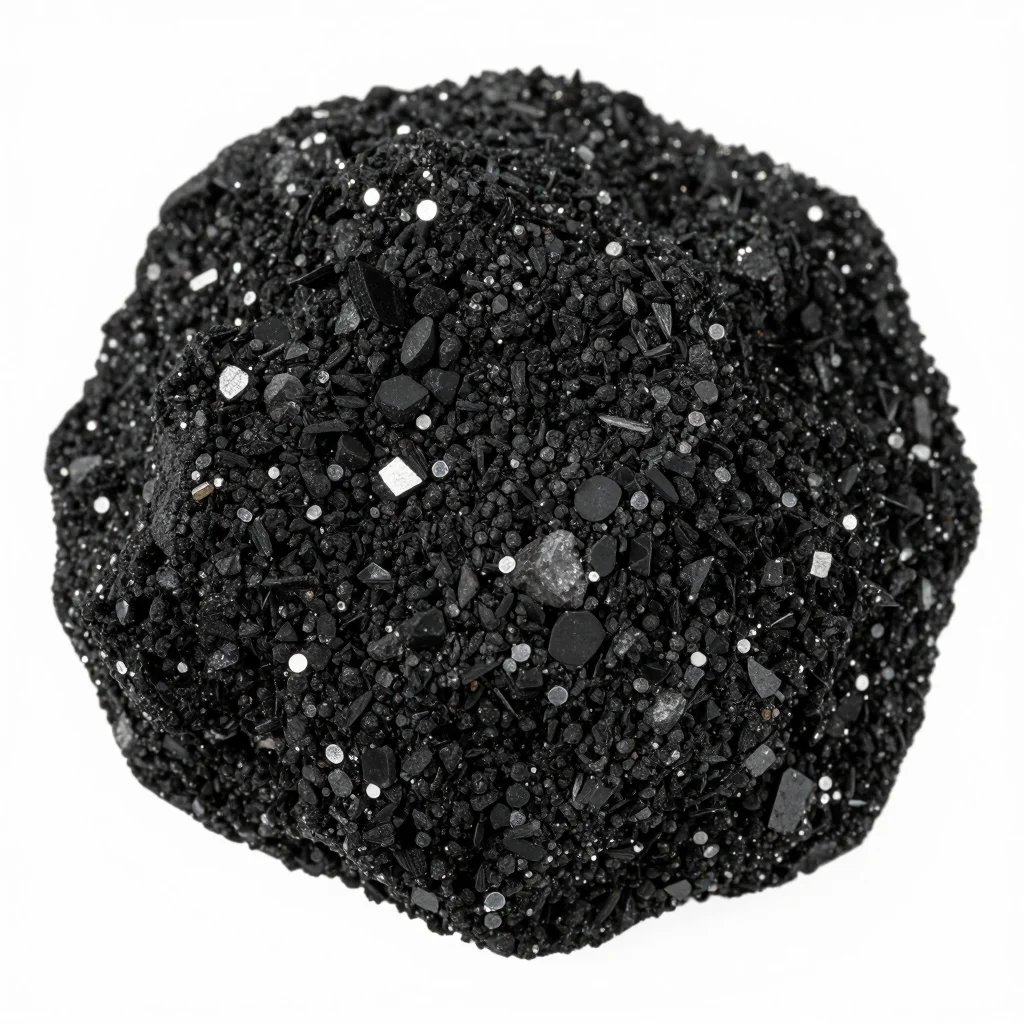
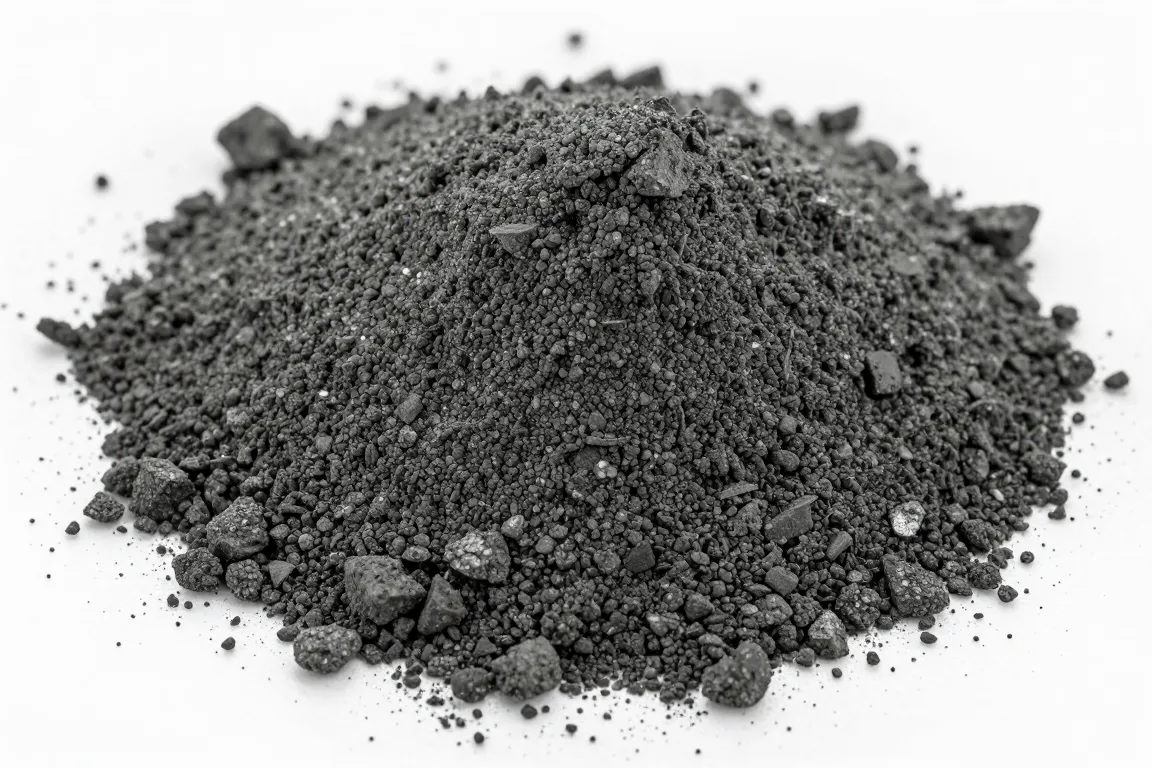
Boron carbide is a ceramic compound of boron and carbon produced by carbothermal reduction of boric oxide (B2O3) with carbon in an electric arc furnace at temperatures above 2,000°C. The molten product is cooled, crushed, and classified into precisely graded particle sizes. The resulting material has a distinctive dark gray to black appearance and a combination of properties unmatched by any other single industrial ceramic.
Two characteristics define boron carbide’s value proposition: extreme hardness and exceptionally low density. At Mohs 9.5 with a specific gravity of only 2.52 g/cm³, it delivers the highest hardness-to-weight ratio of any commercially produced material — a critical advantage in weight-sensitive applications like personnel and vehicle armor.
Key Properties and Specifications
Understanding the technical parameters of boron carbide is essential for writing accurate procurement specifications.
| Parameter | Typical Value | Why It Matters |
|---|---|---|
| B4C content | ≥97% | Higher purity means consistent hardness and wear behavior |
| Total Boron | ≥76% | Indicates stoichiometric B4C formation |
| Total Carbon | ≥21% | Confirms complete carbothermal reduction |
| Mohs hardness | 9.5 | Third only to diamond (10) and CBN — hardest practical abrasive |
| Density | 2.52 g/cm³ | Lowest density among hard ceramics; critical for armor weight reduction |
| Melting point | ~2,350°C | Enables use in high-temperature wear environments |
| Fracture toughness | 2.9–3.7 MPa·m½ | Lower than SiC; material selection must account for brittleness |
| Neutron absorption cross-section | ~600 barns | ~100× higher than most materials; essential for nuclear shielding |
Hardness without density penalty. Unlike tungsten carbide (density ~15.6 g/cm³) or even silicon carbide (~3.2 g/cm³), boron carbide achieves extreme hardness at roughly half the weight. For aerospace and defense applications where every kilogram matters, this performance-to-weight ratio is the primary selection driver.
Neutron absorption is unique. Boron-10, the isotope responsible for neutron capture, gives B4C an absorption cross-section approximately 100 times higher than competing materials. This makes boron carbide the standard material for control rods in pressurized water reactors, spent fuel storage racks, and neutron shielding in medical and research facilities.
Available Grades and Grit Sizes
Boron carbide is available in a range of forms depending on the intended application:
Abrasive grits (FEPA F24–F1200). Standard graded particles for blasting, lapping, and grinding. F24–F60 grades (coarse) are used for water-jet cutting nozzles and wear-resistant linings. F120–F320 grades (medium-fine) are used for lapping compounds and polishing slurries for hard metals and technical ceramics.
Armor-grade powder. Sub-micron to micron-sized powders with tightly controlled particle size distribution for hot-pressing into ballistic plates. Armor grades typically specify B4C ≥98% with strict limits on metallic impurities that could reduce ballistic performance.
Nuclear-grade powder. High-purity (B4C ≥99%) with controlled boron-10 isotopic enrichment for neutron absorption applications. Nuclear grades are produced in small, tightly controlled batches with full traceability documentation.
Sintered components. Near-net-shape parts produced by pressureless sintering or hot pressing for wear components, blast nozzles, and mechanical seals. These are typically custom-manufactured to end-user drawings.
Industrial Applications
Ballistic Armor
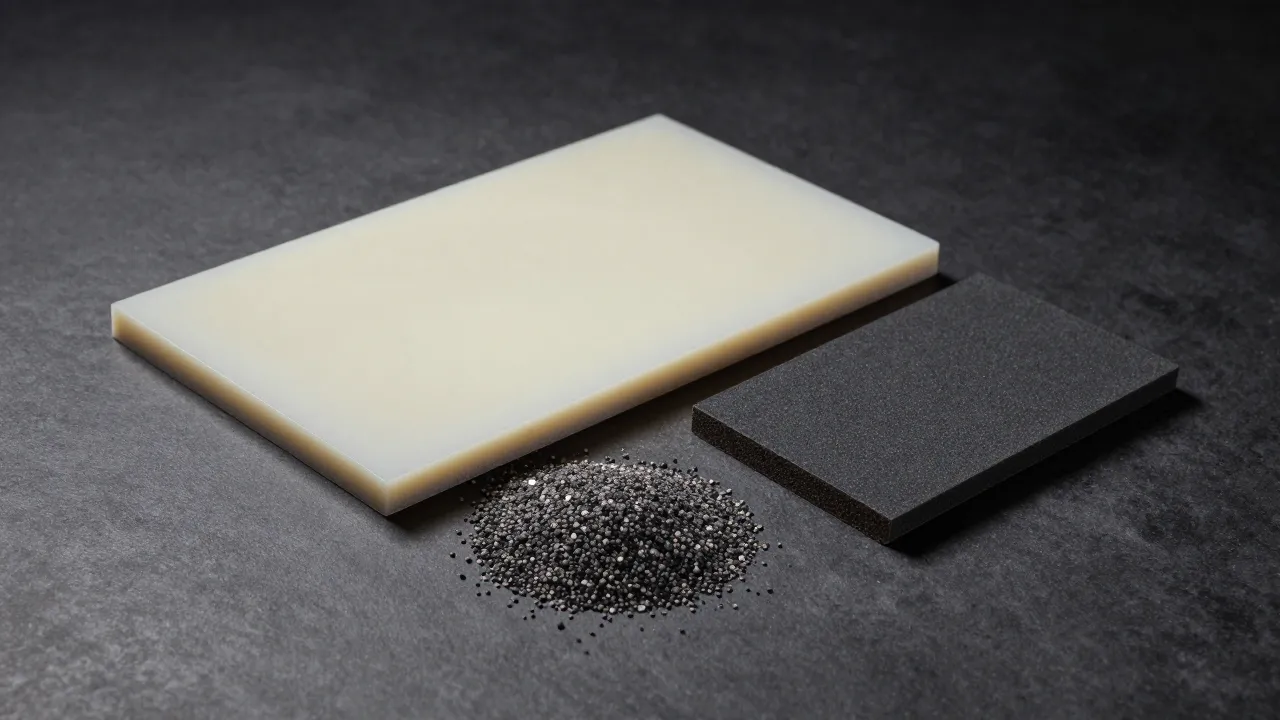
Boron carbide is the preferred ceramic for lightweight armor systems, used in personnel body armor plates, helicopter crew seat inserts, and vehicle appliqué armor panels. Its combination of high hardness (to shatter incoming projectiles) and low density (to keep the armor wearable or vehicle payload manageable) is unmatched. Typical plate formats use hot-pressed boron carbide tiles backed with aramid or UHMWPE composite layers.
Nuclear Shielding and Control
Boron carbide’s neutron capture capability makes it essential for reactor control rods, where B4C pellets or powder-filled tubes absorb excess neutrons to regulate the fission reaction. It is also used in spent fuel storage racks to prevent criticality and in neutron shielding for medical linear accelerators and research neutron sources.
Abrasive Blasting and Water-Jet Cutting
Boron carbide nozzles outperform tungsten carbide and even silicon carbide nozzles in abrasive water-jet and slurry blasting applications. The extreme hardness provides 3–5× longer service life compared to WC nozzles, reducing downtime and replacement costs in high-throughput production environments.
Lapping and Polishing
Boron carbide powders in the F240–F1200 range are used to lap and polish hard materials including tungsten carbide tooling, technical ceramics, and hardened steel components. The controlled friability of high-quality B4C ensures consistent material removal rates without excessive fracturing that would degrade surface finish.
Purchasing Considerations
Key Specifications to Request
When sourcing boron carbide, always specify:
- B4C phase purity — require ≥97% minimum; armor and nuclear grades may need ≥99%
- Particle size distribution — specify target D50 and acceptable range (e.g., D50 = 3.0 ± 0.3μm)
- Total boron and carbon — verify stoichiometry (B ≥76%, C ≥21%) as a proxy for phase purity
- Impurity limits — Fe2O3 ≤0.2%, SiO2 ≤0.3%, free carbon within specification
- Specific surface area (BET) — for fine powders, BET is a more reliable consistency indicator than sieve analysis alone
Common Quality Pitfalls
- Free carbon excess: Incomplete carbothermal reduction leaves residual carbon that weakens sintered components and reduces hardness. Verify with LECO carbon analysis.
- Metallic contamination: Iron pickup during crushing and milling can discolor powder and reduce ballistic performance. Request magnetic material content limits.
- Bimodal distribution: Some suppliers blend coarse and fine fractions to hit a nominal PSD. This causes inconsistent pressing and sintering behavior. Request full PSD data, not just D50.
Frequently Asked Questions
How does boron carbide compare to silicon carbide?
Boron carbide is harder (Mohs 9.5 vs. 9.2–9.5) and significantly lighter (2.52 vs. 3.2 g/cm³). SiC is tougher and less brittle, making it better suited for applications involving impact or thermal shock. B4C is preferred when weight savings or neutron absorption are priorities; SiC is preferred for general wear resistance at lower cost. See our silicon carbide abrasive guide for a detailed comparison.
Why is boron carbide so expensive?
Boron carbide production requires high-purity boric oxide feedstock and energy-intensive electric arc furnace processing at temperatures exceeding 2,000°C. The global supply base is concentrated among a small number of qualified producers. Fine and sub-micron grades require additional milling and classification steps that add cost. For perspective, B4C grit typically costs 3–8× more than SiC and 10–20× more than brown fused alumina per kilogram.
What is the difference between armor-grade and abrasive-grade boron carbide?
Armor-grade B4C has tighter particle size control (typically sub-micron to micron range), higher purity (≥98%), and stricter impurity limits to ensure consistent hot-pressing behavior and ballistic performance. Abrasive-grade permits slightly lower purity (≥97%) and wider particle size tolerances. The two grades are not interchangeable in critical applications.
Can boron carbide be recycled or reused?
Yes, in abrasive blasting applications, boron carbide nozzles and grit can be reused multiple times, though grit does fracture and round over time. Spent B4C abrasive powder from lapping operations is typically not recycled due to contamination with workpiece material and lapping vehicle. In nuclear applications, boron carbide control rods are replaced on scheduled cycles and the spent material is managed according to nuclear waste protocols.
Ready to Source Boron Carbide?
Boron carbide delivers an unmatched combination of extreme hardness, low density, and neutron absorption capability. Whether you need abrasive grit, armor-grade powder, or sintered components, the specifications above provide a framework for supplier evaluation.
Request a quote for boron carbide — we supply FEPA-standard grit sizes, armor-grade and nuclear-grade powders, and provide lot-specific certificates of analysis with every shipment.