Silicon Carbide Abrasive: Applications, Grit Sizes & Market Demand
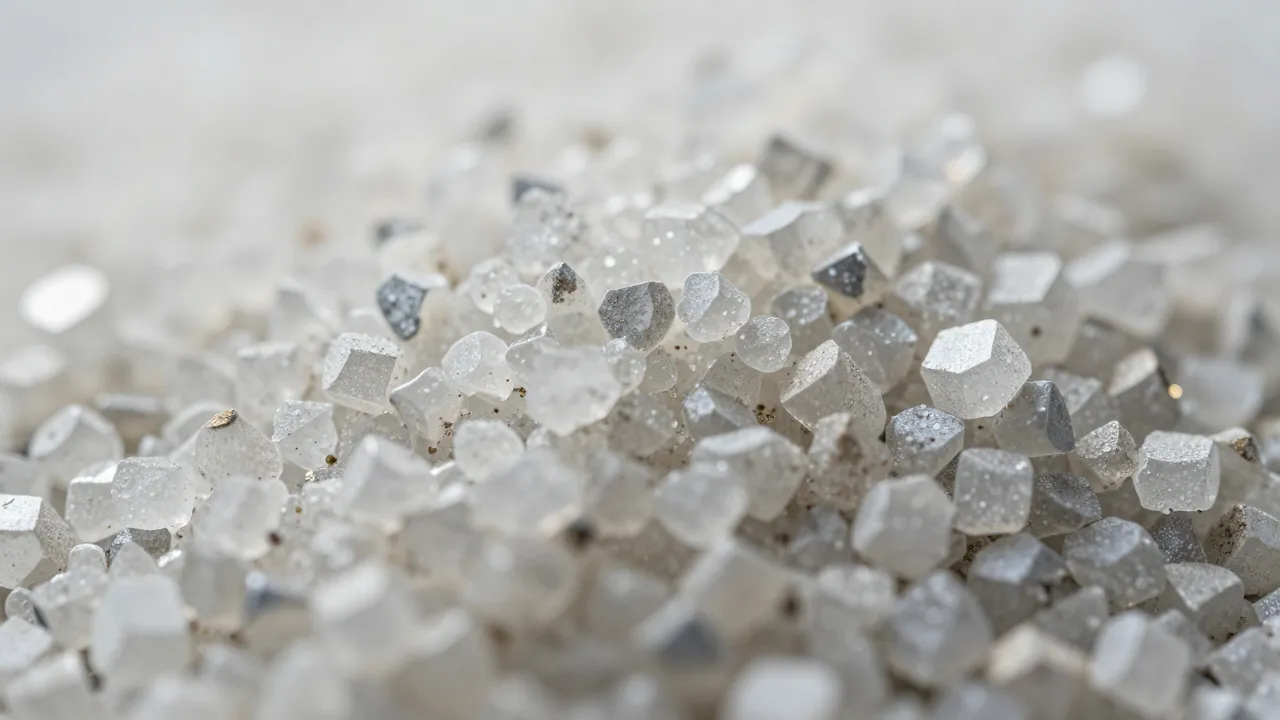
Silicon carbide (SiC) occupies a unique position in the abrasive materials landscape. With a Mohs hardness of 9.5 — exceeded only by diamond and cubic boron nitride among commercial abrasives — SiC delivers cutting performance that aluminum oxide-based grains simply cannot match on hard, brittle, and non-metallic materials.
This guide covers the properties that make SiC effective, the grit size systems used worldwide, the industrial applications where SiC excels, and the market dynamics shaping supply and pricing.
What Makes Silicon Carbide Effective as an Abrasive?
Silicon carbide is a synthetic compound of silicon and carbon, produced by the Acheson process: heating a mixture of silica sand and petroleum coke in a resistance furnace to temperatures above 2,200°C. The resulting crystals are extremely hard, chemically inert, and thermally conductive.
Key Physical Properties
| Property | Value | Significance |
|---|---|---|
| Chemical formula | SiC | Extremely stable compound |
| Mohs hardness | 9.5 | Cuts glass, ceramics, stone effectively |
| Knoop hardness | 2,500–2,600 | Higher than any fused alumina |
| Density | 3.20–3.22 g/cm³ (true) | Lower than Al₂O₃ — lighter grain |
| Bulk density | 1.45–1.55 g/cm³ | Affects wheel formulation |
| Thermal conductivity | ~120 W/mK | Excellent heat dissipation during grinding |
| Thermal expansion | 4.0–4.5 × 10⁻⁶/°C | Lower than Al₂O₃ — better dimensional stability |
| Decomposition temperature | ~2,700°C | Extremely refractory |
Hardness and friability are SiC’s defining characteristics. At Mohs 9.5, SiC cuts materials that aluminum oxide (Mohs 9) cannot effectively penetrate. However, SiC is also more brittle than fused alumina — its grains fracture more readily under impact. This friability keeps cutting edges sharp but means SiC wears faster on tough, ductile materials.
Thermal conductivity is an underappreciated advantage. SiC conducts heat approximately five times better than fused alumina. During grinding, this means heat dissipates more quickly from the cutting zone, reducing thermal damage to the workpiece — particularly important for heat-sensitive materials like glass and certain ceramics.
Grit Size Standards
SiC abrasive grains are graded by particle size using three major standards:
FEPA (European)
The most widely used international standard. “F” prefix designates fused/grain abrasives:
| FEPA Grade | Particle Size (μm) | Typical Application |
|---|---|---|
| F12 | 1,700–2,000 | Rough cutting, snagging |
| F24 | 700–850 | Heavy grinding |
| F36 | 500–600 | Medium grinding |
| F46 | 350–425 | General grinding |
| F60 | 250–300 | Medium-fine grinding |
| F80 | 180–212 | Fine grinding |
| F120 | 106–125 | Very fine grinding |
| F220 | 53–63 | Fine finishing |
| F320 | 29–35 | Honing |
| F600 | 14–20 | Lapping |
| F1200 | 3–5 | Polishing |
ANSI (American) and JIS (Japanese)
Both systems parallel FEPA with slightly different size boundaries for some grades. When ordering, always specify the standard (FEPA, ANSI, or JIS) to avoid confusion — an “80 grit” ANSI is not the same as an “F80” FEPA.
Recommendation: Specify FEPA grades for international procurement. FEPA is the most widely recognized standard and reduces specification ambiguity.
Industrial Applications
Glass Grinding and Processing
SiC is the standard abrasive for glass edge grinding, drilling, and surface finishing. Its extreme hardness cuts glass cleanly without chipping, while its thermal conductivity prevents localized overheating that can cause thermal cracks. Both black and green SiC are used — green SiC for precision optical glass, black SiC for architectural glass.
Stone and Ceramic Processing
- Granite and marble cutting: SiC segment rims on circular saws
- Ceramic tile cutting: SiC blades and grinding wheels
- Technical ceramics: Machining alumina, zirconia, and silicon nitride components
- Refractory cutting: Shaping firebrick and refractory castables
SiC’s hardness makes it the only practical abrasive for these hard, brittle materials.
Non-Ferrous Metal Grinding
SiC outperforms fused alumina on non-ferrous metals because:
- Aluminum: SiC’s sharp grains cut without loading (clogging) the wheel surface
- Copper and brass: Clean cutting action without smearing
- Titanium: SiC’s hardness cuts through titanium’s tough oxide layer
For ferrous metals, fused alumina is generally preferred — see our WFA/BFA/SiC selection guide for details.
Coated Abrasives
SiC grains are widely used on sandpaper, abrasive belts, and discs for:
- Wood finishing (particularly hardwood and laminate)
- Auto body repair (primer and paint sanding)
- Plastic and composite finishing
- Marble polishing
Semiconductor and Electronics
Green SiC (≥99% purity) is essential for:
- Silicon wafer slicing and lapping
- Compound semiconductor processing (SiC, GaN wafers)
- LED substrate preparation
- Precision lapping of optical components
This is the highest-value application for SiC abrasives, demanding strict purity and particle size control.
Market Demand and Trends
Global SiC Market Size
The global silicon carbide market continues to grow, driven by:
- Electric vehicle expansion: SiC power semiconductors (not abrasive-grade) are creating massive new demand, but this also supports abrasive-grade SiC production capacity
- Solar photovoltaic manufacturing: Wafer slicing for solar cells consumes significant green SiC
- Construction activity: Stone and ceramic processing demand correlates with global construction spending
- Industrial manufacturing recovery: Post-pandemic capacity expansion in metal fabrication and automotive
Supply Chain Dynamics
China produces approximately 65–70% of global SiC output, with major production clusters in Henan, Gansu, and Ningxia provinces. Key factors affecting supply:
- Energy costs: SiC production is extremely energy-intensive (~10,000 kWh per ton). Electricity price fluctuations directly impact production costs
- Environmental regulations: Chinese environmental inspections periodically restrict production at older, less compliant facilities
- Raw material availability: High-quality petroleum coke supply affects both pricing and product quality
Price Trends
SiC prices have been relatively stable but face upward pressure from:
- Rising energy costs in major producing regions
- Growing semiconductor-grade demand competing for high-purity capacity
- Logistics and shipping cost increases on export routes
Buyers should plan for potential price increases of 5–10% annually and consider framework agreements with suppliers to lock in pricing for 6–12 month periods.
Purchasing Considerations
- Specify SiC content: ≥98% for black SiC, ≥99% for green SiC
- Define grit size by standard: Always reference FEPA, ANSI, or JIS — never just “grit 80”
- Request PSD analysis: Ensure particle size distribution is single-mode (not blended)
- Verify free carbon content: ≤0.3% for black SiC, ≤0.1% for green SiC
- Check bulk density: Consistent density (1.45–1.55 g/cm³) indicates consistent processing
- Ask about country of origin and smelting method: Acheson-process SiC generally has higher quality than smaller-scale alternatives
Frequently Asked Questions
Why does silicon carbide work better than aluminum oxide on glass?
SiC is significantly harder (Mohs 9.5 vs. 9.0). Glass has a Mohs hardness of 5.5–6.5, so both materials can cut it, but SiC’s harder, sharper grains cut more cleanly with less subsurface damage. SiC’s higher thermal conductivity also prevents heat buildup that causes thermal cracking in glass.
What is the difference between black and green SiC for abrasive applications?
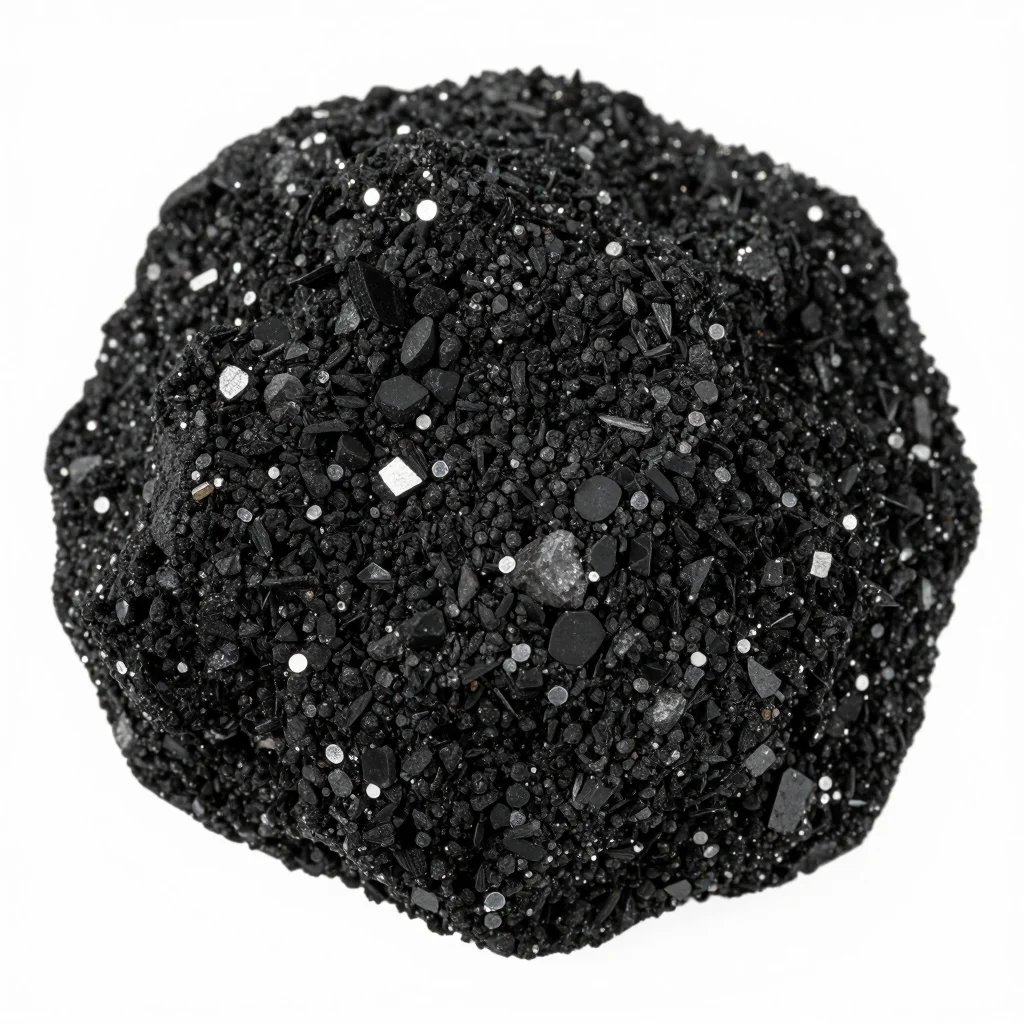
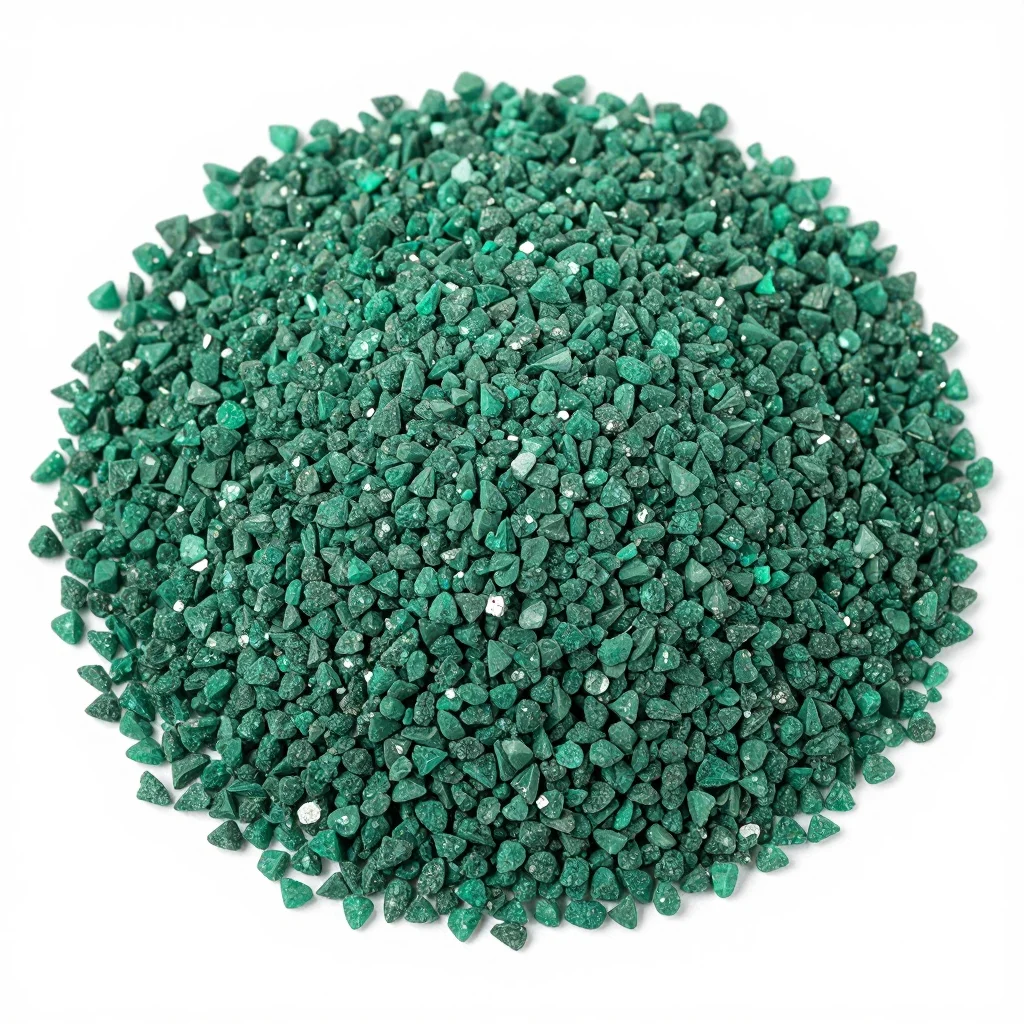
Black SiC (≥98% SiC) is the standard industrial abrasive — tough, sharp, and cost-effective. Green SiC (≥99% SiC) is purer, slightly harder, and more friable, making it better for precision applications like glass polishing and semiconductor wafer processing. Green SiC costs 2–3x more. See our black vs green SiC comparison for complete data.
Is silicon carbide recyclable in blasting applications?
Yes, SiC can be recycled in blast cleaning operations, though it is less commonly recycled than fused alumina due to its higher friability. SiC typically achieves 3–5 reuse cycles in closed-circuit blast systems. For many recyclable blasting applications, white fused alumina is a more cost-effective choice.
How is the growing EV market affecting SiC abrasive supply?
The EV market is primarily driving demand for semiconductor-grade SiC (single-crystal wafers), not abrasive-grade SiC. However, the overall increase in SiC production capacity benefits abrasive-grade supply as well. The main supply impact has been price pressure on high-purity green SiC, where semiconductor and abrasive applications compete for the same production capacity.
Ready to Source Silicon Carbide?
Whether you need black SiC for general industrial grinding or green SiC for precision glass and semiconductor applications, understanding the specifications above helps you qualify material quickly and avoid costly specification errors.
Request a black SiC quote or get green SiC pricing — we supply both grades in FEPA grit sizes from F12 to F1200 with COAs verifying SiC purity and particle size distribution.