Black vs Green Silicon Carbide: Key Differences & Applications
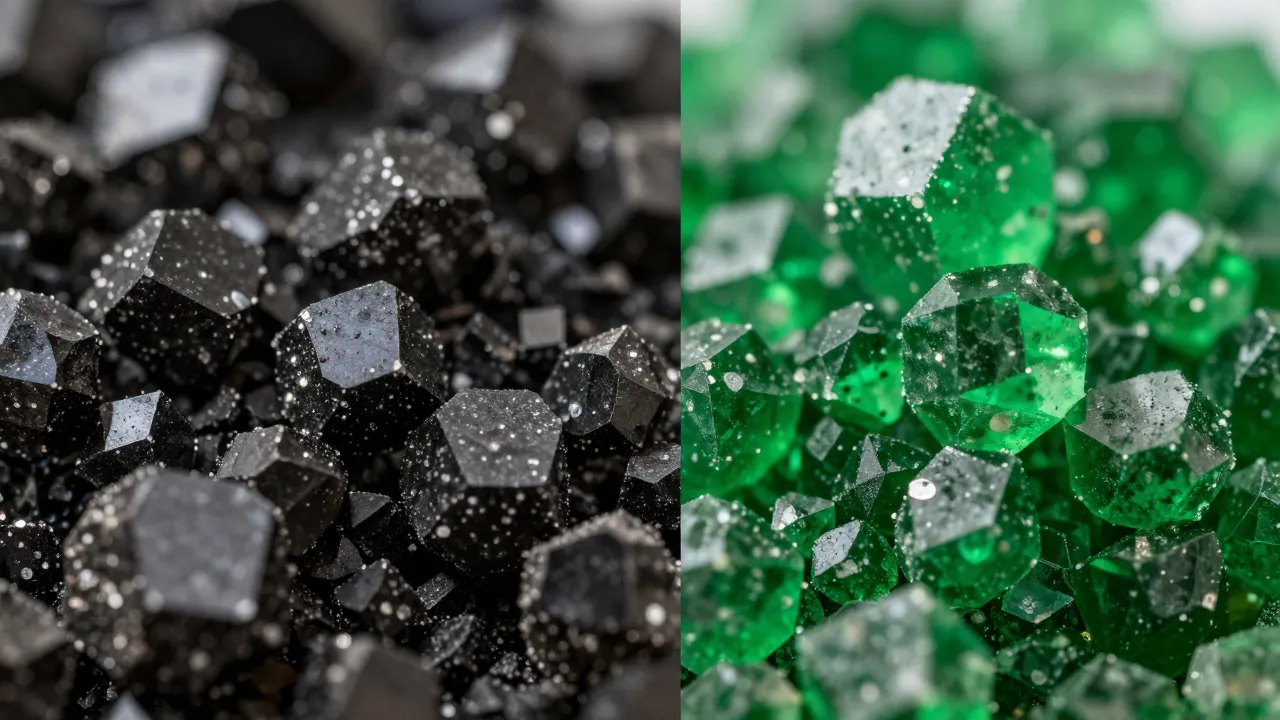
Silicon carbide (SiC) is one of the hardest synthetic abrasive materials available, with a Mohs hardness of 9.5 — second only to diamond and cubic boron nitride among commercially available grains. But within the SiC family, black and green variants have important differences that affect performance, cost, and application suitability.
This comparison gives you the technical data needed to choose the right SiC grade for your specific application, whether you are grinding non-ferrous metals, cutting stone, lapping semiconductors, or specifying refractory linings.
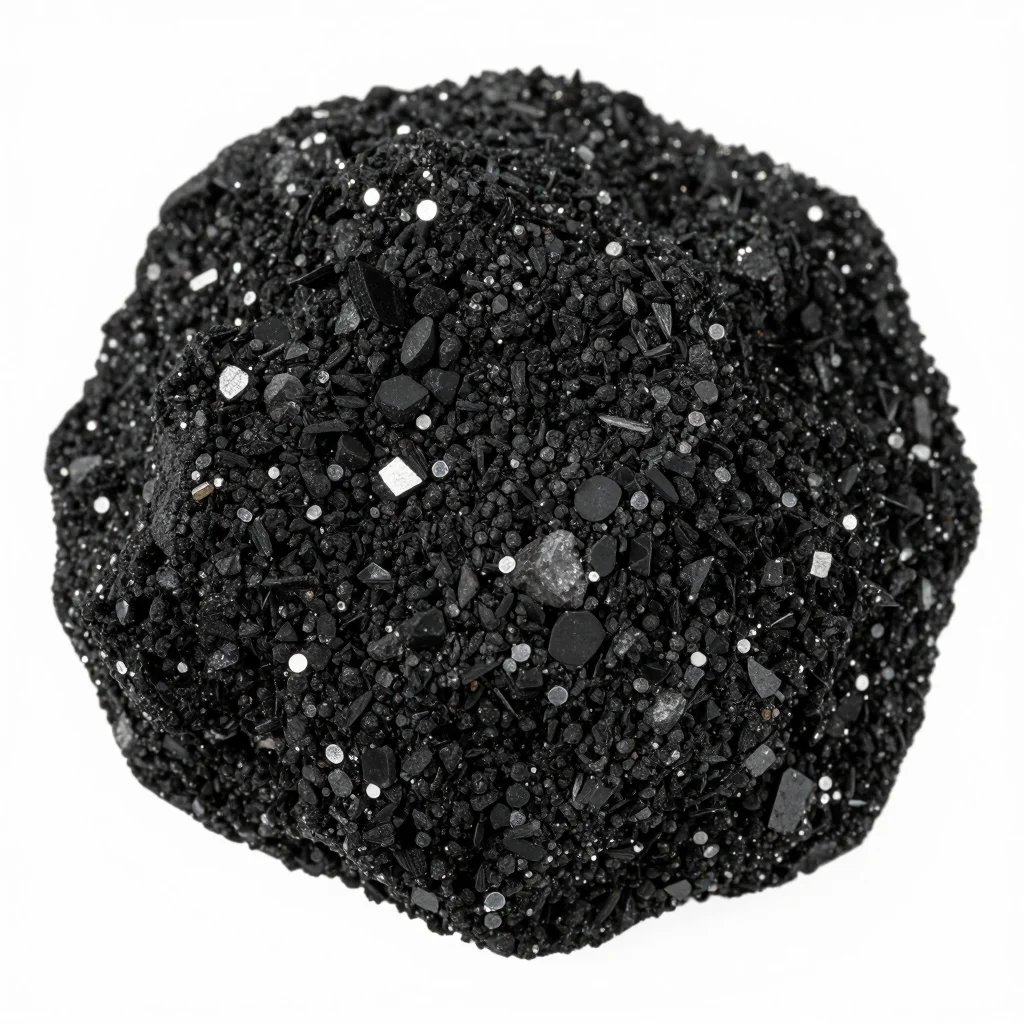
What Is Black Silicon Carbide?
Black silicon carbide is produced by heating a mixture of silica sand and petroleum coke in a resistance furnace at temperatures around 2,200–2,500°C. The resulting crystal is at least 98% SiC with minor impurities of free carbon, silicon dioxide, and iron oxide that give it a dark black to dark gray appearance.
Black SiC is the higher-volume, lower-cost grade of silicon carbide. Its combination of extreme hardness, sharp grain shape, and high thermal conductivity makes it the workhorse SiC abrasive for general industrial applications.
Key characteristics:
- Exceptional hardness (Mohs 9.5)
- Sharp, needle-like grain shape that cuts aggressively
- High thermal conductivity (~120 W/mK)
- Relatively low bulk density (1.45–1.55 g/cm³)
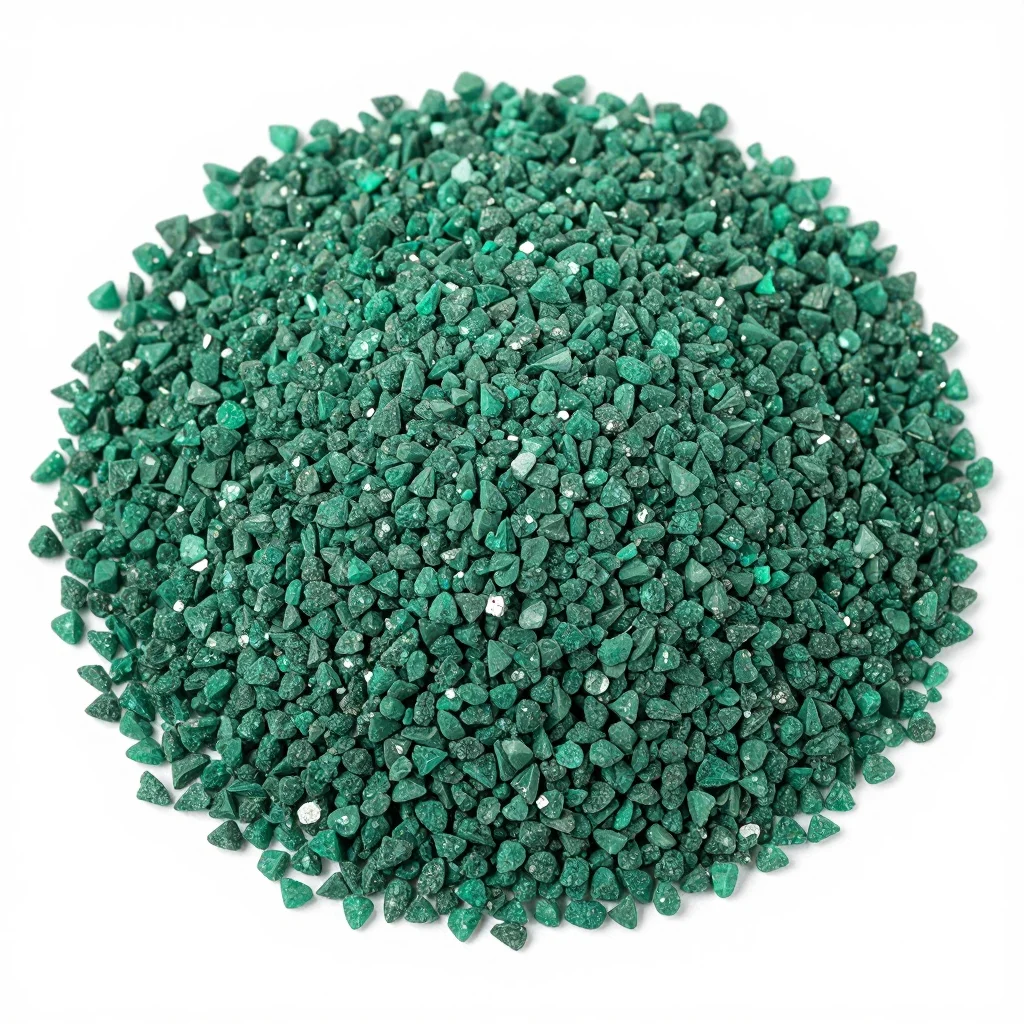
What Is Green Silicon Carbide?
Green silicon carbide is produced using a similar process but with higher-purity raw materials — typically high-purity silica sand and petroleum coke with additional processing to reduce impurities. The result is a grain with ≥99% SiC and a distinctive green color from the reduced impurity content.
Green SiC is harder, purer, and more friable than black SiC. These properties make it the preferred choice for precision applications where surface finish quality and purity are critical, but it comes at a significant cost premium.
Key characteristics:
- Higher purity (≥99% SiC)
- Slightly higher hardness than black SiC
- More friable (fractures more readily to expose fresh cutting edges)
- Bright green color indicating purity
- Higher cost (~2–3x black SiC)
Side-by-Side Comparison
| Property | Black SiC | Green SiC |
|---|---|---|
| SiC content | ≥98% | ≥99% |
| Free carbon | ≤0.3% | ≤0.1% |
| Fe₂O₃ content | ≤0.5% | ≤0.2% |
| Bulk density | 1.45–1.55 g/cm³ | 1.45–1.55 g/cm³ |
| Mohs hardness | 9.5 | 9.5 |
| Knoop hardness | ~2,500 | ~2,600 |
| Grain shape | Sharp, needle-like | Sharp, more uniform |
| Friability | Moderate | Higher |
| Color | Black / dark gray | Green |
| Relative cost | Baseline | 2–3x black SiC |
| Thermal conductivity | ~120 W/mK | ~120 W/mK |
Purity Difference
The 1% gap in SiC content may seem small, but it matters in practice. Green SiC’s lower free carbon and iron oxide content means:
- Cleaner cuts on glass, ceramics, and semiconductor materials
- No metallic contamination on sensitive surfaces
- Better performance in high-purity refractory and ceramic applications
Cost Difference
Green SiC costs roughly 2–3 times more than black SiC per metric ton due to the higher-grade raw materials and additional processing required. This price gap means green SiC should only be specified where its purity and performance advantages deliver measurable value.
When to Choose Black Silicon Carbide
- Non-ferrous metal grinding: Aluminum, brass, copper, and titanium where the extreme hardness of SiC outperforms alumina-based abrasives
- Stone and concrete cutting/ grinding: Granite, marble, concrete, and masonry — SiC’s hardness cuts these materials efficiently
- Cast iron grinding: Where the brittleness of SiC works well against the graphite flakes in gray and ductile iron
- Refractory applications: Kiln furniture, refractory coatings, and wear-resistant linings where ≥98% SiC provides adequate performance
- General-purpose blasting: Surface preparation on non-metallic substrates
Black SiC delivers the best value for applications that need extreme hardness but do not require maximum purity.
When to Choose Green Silicon Carbide
- Glass grinding and polishing: Where purity prevents scratching and surface defects
- Ceramic machining: Technical ceramics, porcelain, and advanced ceramic components
- Semiconductor wafer processing: Lapping and polishing silicon wafers where even trace impurities cause defects
- Precision lapping: Optical lenses, gauge blocks, and precision flat surfaces
- High-purity refractory coatings: Where ≥99% SiC is required for chemical resistance
If surface finish quality is the primary metric and the workpiece material is sensitive to contamination, green SiC justifies its cost premium.
How SiC Differs from Fused Alumina
Both black and green SiC are harder than any grade of fused alumina (Mohs 9.5 vs. 9.0). However, SiC is also more brittle — it fractures more easily under impact. This means:
- SiC cuts faster on hard, brittle materials (glass, ceramics, stone)
- Fused alumina lasts longer on tough, ductile materials (steel, alloys)
- SiC is preferred for non-ferrous metals; fused alumina for ferrous metals
For a complete three-way comparison, see our WFA vs BFA vs SiC selection guide.
Purchasing Considerations
Specification Checklist
- SiC minimum content (≥98% for black, ≥99% for green)
- Free carbon maximum (affects cutting performance and contamination)
- Fe₂O₃ maximum (especially important for green SiC)
- Grit size and standard (FEPA, JIS, or ANSI)
- Bulk density range (affects wheel formulation)
- Particle size distribution — not just nominal grit number
Quality Pitfalls
- SiC content below specification: Some suppliers dilute with recycled material. Always request a COA with SiC% verified by XRF or wet chemistry.
- Grit size blending: Check PSD curves for double peaks, which indicate blending of adjacent grit sizes rather than proper screening.
- Moisture in fine grades: SiC micro powder absorbs moisture. Verify sealed packaging with desiccant.
Frequently Asked Questions
Can I use black SiC instead of green SiC to save money?
It depends on the application. For stone cutting, cast iron grinding, and general non-ferrous metal work, black SiC is a cost-effective alternative. For glass polishing, semiconductor processing, and precision ceramic machining, the impurities in black SiC will cause surface defects and should not be substituted.
Why is silicon carbide better than aluminum oxide for some applications?
SiC is harder (Mohs 9.5 vs. 9.0) and has higher thermal conductivity, making it more effective on hard, brittle materials like glass, ceramics, and stone. It also cuts non-ferrous metals (aluminum, copper) more efficiently. However, fused alumina is tougher and more durable on ferrous metals, making it the better choice for steel grinding.
What grit sizes are available?
Both black and green SiC are available in FEPA grit sizes from F12 (coarse) through F1200 (fine/micro). Common grinding sizes are F36, F46, F60, F80, and F120. For lapping and polishing, micro grades from F600 to F1200 (particle sizes 20μm down to 3μm) are standard.
Is silicon carbide safe for blasting stainless steel?
Yes. SiC contains no free iron, so it will not cause ferrous contamination on stainless steel surfaces. Both black and green SiC are suitable for blast cleaning stainless steel, though white fused alumina is more commonly used for this purpose due to lower cost and adequate hardness.
What about silicon carbide for refractories?
SiC-based refractories offer excellent thermal shock resistance, high thermal conductivity, and resistance to slag attack. Black SiC (≥98%) is typically used for refractory applications where extreme purity is not required. For more on refractory material selection, see our tabular alumina and fused mullite guides.
Ready to Source Silicon Carbide?
Both black and green silicon carbide deliver extreme hardness for demanding abrasive and refractory applications. The choice comes down to purity requirements versus cost.
Request a black SiC quote for general industrial use, or get green SiC pricing for precision applications. We supply both grades with COAs, standard FEPA grit sizes, and consistent quality across shipments.