What Is Tabular Alumina? Properties for Refractory Applications
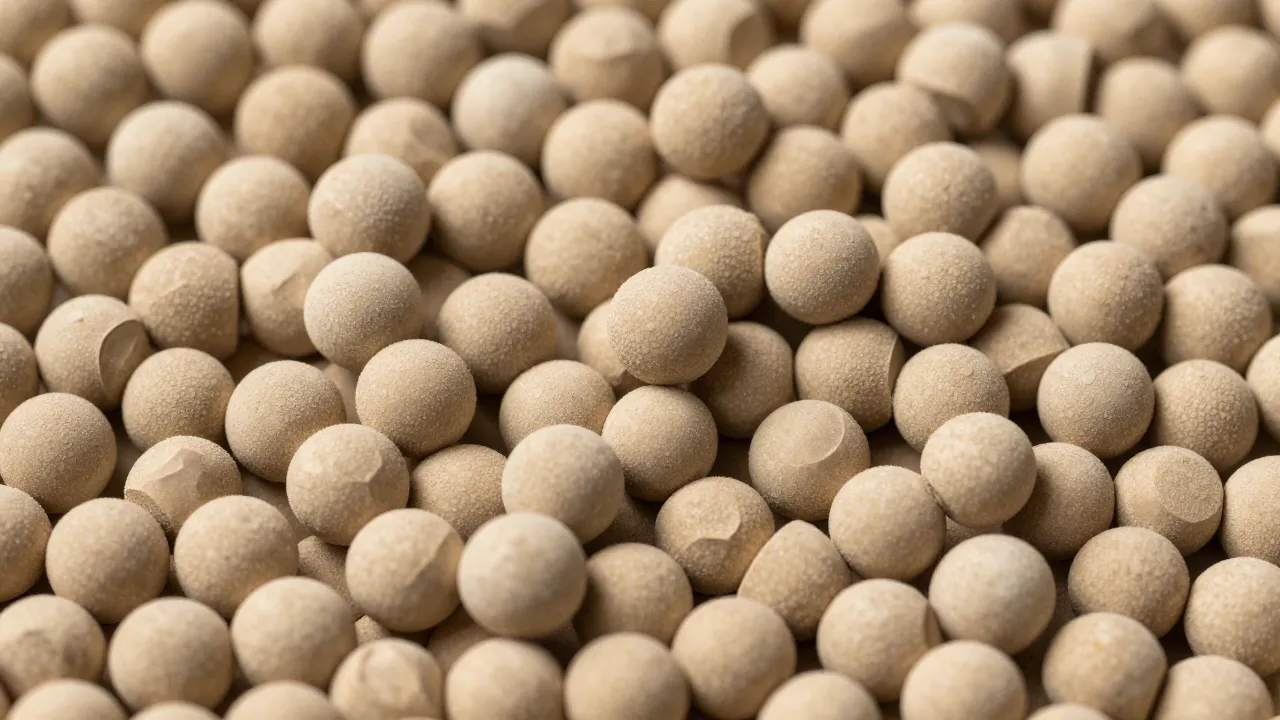
When refractory engineers specify materials for the most demanding hot-face applications — steel ladles, cement kilns, incinerators, and petrochemical reactors — tabular alumina frequently appears on the bill of materials. Its combination of ultra-high purity, exceptional density, and unique plate-like microstructure makes it the premium aggregate for critical refractory linings where failure is not an option.
This article explains what tabular alumina is, how it differs from other alumina-based refractory materials, the key specifications that matter, and the applications where it delivers superior performance.
What Is Tabular Alumina?
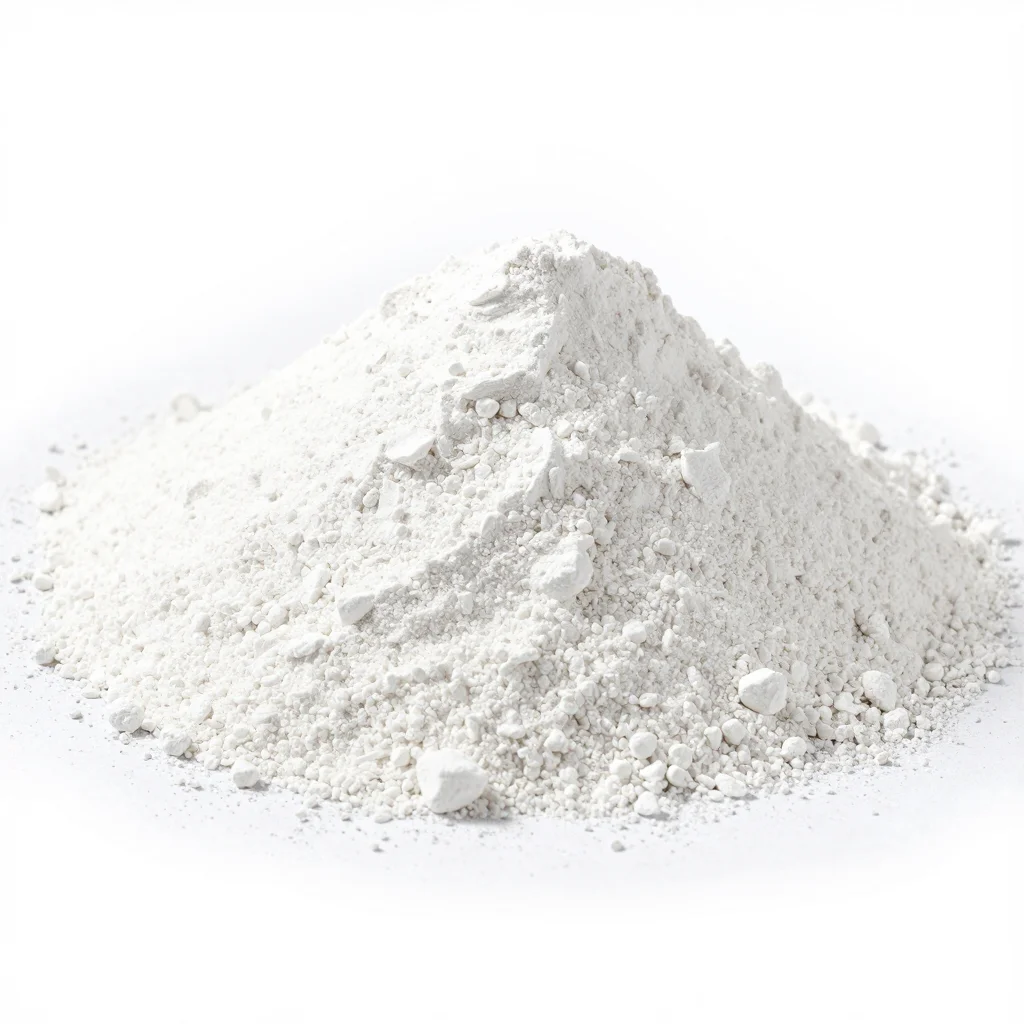
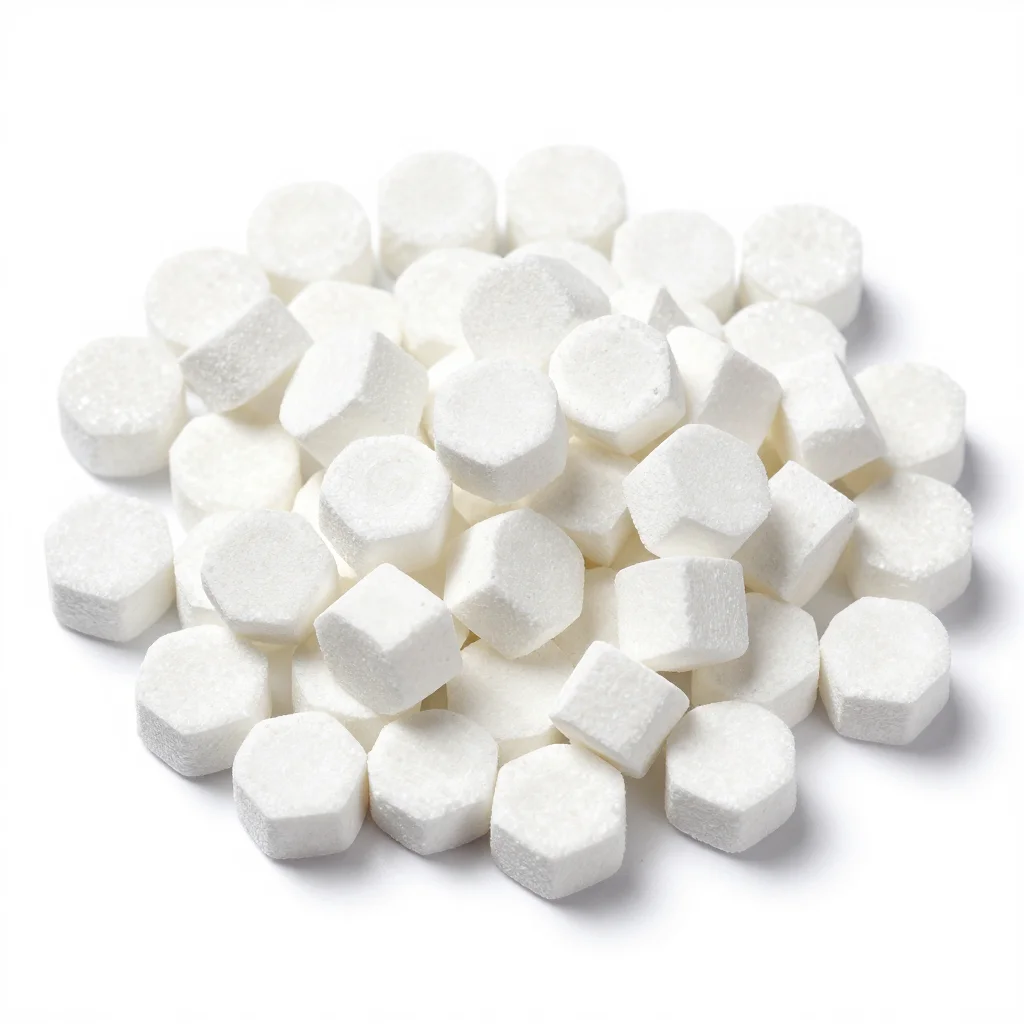
Tabular alumina is a high-purity, high-density form of aluminum oxide (Al₂O₃) produced by sintering calcined alumina at extremely high temperatures — typically 1,800–1,900°C — in a shaft kiln. The name “tabular” comes from the characteristic tablet-shaped or plate-like crystals that develop during the sintering process.
Unlike fused alumina, which is produced by melting and cooling, tabular alumina is sintered — meaning the calcined alumina particles are heated just below their melting point until they bond together through solid-state diffusion. This sintering process produces a material with:
- Nearly theoretical density (≥3.50 g/cm³ bulk density, approaching 3.95 g/cm³ true density)
- Very low porosity (water absorption ≤1.0%)
- A unique microstructure of well-developed tabular Al₂O₃ crystals with closed, spherical pores
The result is a refractory aggregate that is denser, purer, and more thermally stable than any fused alumina product.
Key Properties and Specifications
| Parameter | Typical Value | Significance |
|---|---|---|
| Al₂O₃ content | ≥99.5% | Ultra-high purity for chemical resistance |
| Bulk density | ≥3.50 g/cm³ | Near-theoretical density minimizes porosity |
| True density | ~3.95 g/cm³ | Approaches theoretical density of α-Al₂O₃ |
| Water absorption | ≤1.0% | Indicates closed-pore microstructure |
| Apparent porosity | ≤5.0% | Low porosity resists slag penetration |
| Refractoriness | >1,800°C | Suitable for extreme-temperature service |
| Crystal form | α-Al₂O₃ (tabular) | Plate-like morphology from sintering |
| Na₂O content | ≤0.4% | Low sodium ensures high-temperature stability |
Why Density Matters
The high bulk density of tabular alumina (≥3.50 g/cm³) compared to fused alumina (1.75–1.95 g/cm³ for WFA) reflects a fundamentally different material structure. Tabular alumina is a dense, sintered aggregate — not crushed from a fused block. This means:
- Lower porosity in refractory castables, reducing slag and melt penetration
- Higher hot strength at temperatures above 1,600°C
- Better creep resistance under load at operating temperature
- Improved thermal shock resistance due to the closed-pore microstructure
The Sintering Advantage
Fused alumina is made by melting and crushing — a process that introduces internal stresses and micro-cracks. Tabular alumina’s sintering process eliminates these defects, producing a thermodynamically stable crystal structure that does not undergo phase transformations during heating and cooling cycles. This stability translates directly to longer refractory service life.
Main Applications
Steel Industry Refractories
Tabular alumina is the aggregate of choice for critical refractory components in steelmaking:
- Steel ladle linings: Hot-face castables and bricks exposed to molten steel at 1,600°C+
- Slide gates and submerged entry nozzles: Precision-cast components requiring thermal shock resistance and erosion resistance
- Tundish furniture: Impact pads, weirs, and dams in continuous casting
- RH degasser snorkels: Severe-service components exposed to molten steel and vacuum conditions
The combination of high purity (≥99.5% Al₂O₃), low porosity, and thermal stability makes tabular alumina refractories resistant to steel slag attack and thermal cycling.
Cement and Lime Kilns
In cement rotary kilns, tabular alumina is used in the burning zone and transition zone linings where temperatures reach 1,400–1,500°C and chemical attack from clinker phases is aggressive. Its low Na₂O content prevents alkali-spalling degradation that affects lower-purity alumina aggregates.
Petrochemical and Incineration
- Reactor linings in catalytic cracking units and reformers
- Incinerator linings exposed to corrosive gases at high temperature
- Sulfur recovery units requiring chemical resistance to acidic gases
Advanced Ceramics
Tabular alumina serves as a high-purity raw material for:
- Technical ceramics requiring ≥99.5% Al₂O₃
- Wear-resistant ceramic tiles and liners
- Ceramic proppants for oil and gas fracturing
Tabular Alumina vs Other Refractory Aggregates
| Property | Tabular Alumina | White Fused Alumina | Calcined Alumina | Fused Mullite |
|---|---|---|---|---|
| Al₂O₃ | ≥99.5% | ≥99.5% | ≥99.0% | 70–77% |
| Bulk density | ≥3.50 g/cm³ | 1.75–1.95 g/cm³ | N/A (powder) | ≥3.00 g/cm³ |
| Porosity | ≤5.0% | Higher | N/A | Higher |
| Max service temp | >1,800°C | >1,800°C | N/A | ~1,850°C |
| Slag resistance | Excellent | Good | N/A | Good |
| Cost | Premium | Moderate | Lower | Moderate |
Tabular alumina’s density advantage is clear. For a detailed comparison with calcined alumina specifically, see our tabular alumina vs calcined alumina guide.
Purchasing Considerations
Key Specifications
When sourcing tabular alumina for refractory applications, specify:
- Al₂O₃ minimum (≥99.5% standard)
- Bulk density (≥3.50 g/cm³ for coarse fractions)
- Water absorption (≤1.0% — confirms closed-pore structure)
- Na₂O maximum (≤0.4% for refractory-grade)
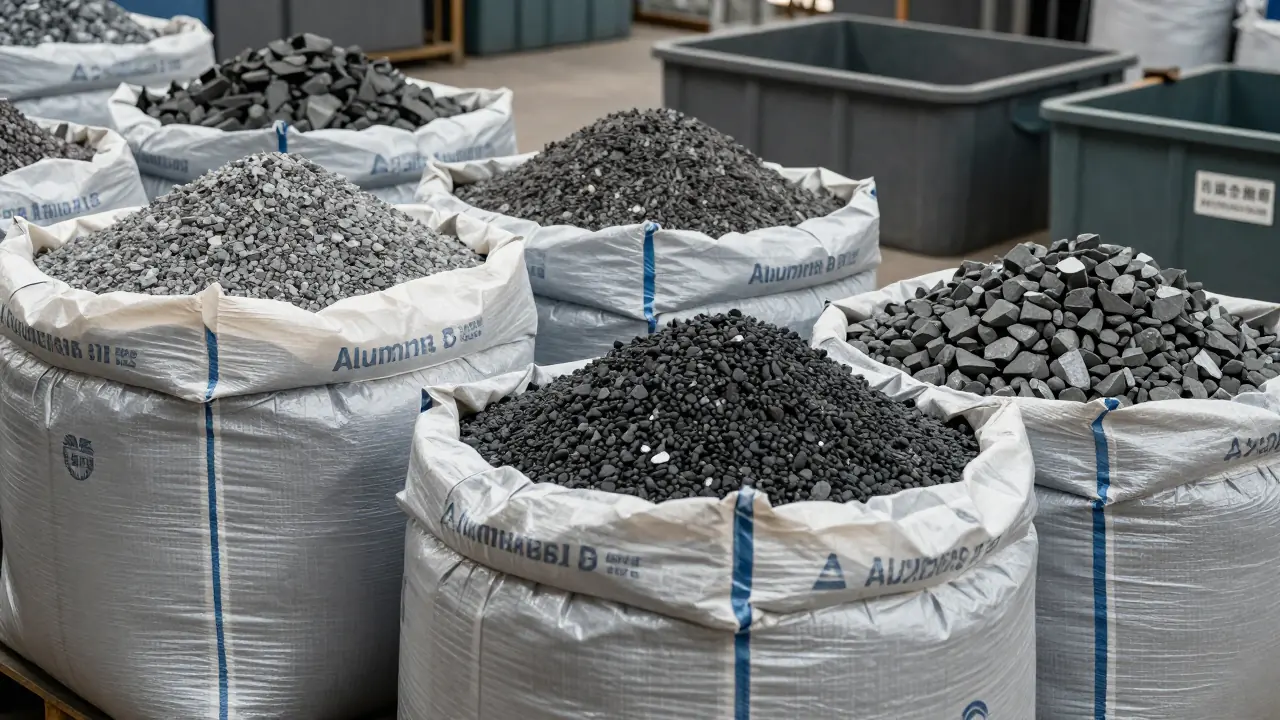
- Particle size distribution — tabular alumina is typically supplied in graded fractions from 0–1mm through 5–10mm and beyond
- Fines content (≤5% below minimum screen size) — excess fines affect castable rheology
Quality Verification
- Request COAs with density and water absorption data per lot
- Verify Al₂O₃ and Na₂O by chemical analysis
- Check that the material is truly sintered (not reprocessed fused alumina) — true tabular alumina shows the characteristic tabular crystal morphology under microscopy
- Test bulk density on incoming material — deviations from specification indicate processing problems
Frequently Asked Questions
Why is tabular alumina more expensive than fused alumina?
Tabular alumina costs more because the sintering process is energy-intensive (heating to 1,900°C for extended periods) and requires higher-purity raw materials. However, the longer service life of tabular alumina-based refractories often delivers lower total cost per ton of steel produced. A ladle lining that lasts 20% longer reduces downtime, material consumption, and labor costs per campaign.
Can fused alumina be substituted for tabular alumina?
In less critical applications, yes. Fused alumina (especially WFA) provides similar chemical purity. However, fused alumina cannot match tabular alumina’s density, low porosity, or thermal stability. In critical hot-face applications (steel ladles, slide gates), substituting fused alumina for tabular alumina will significantly reduce service life.
What particle sizes are available?
Tabular alumina is typically supplied in graded fractions: 0–0.5mm, 0.5–1mm, 1–3mm, 3–5mm, 5–8mm, and 8–15mm. Custom fractions are available. Fine powder (≤45μm) is also produced for matrix components in low-cement castables.
How does tabular alumina compare to fused mullite for refractories?
Tabular alumina has higher Al₂O₃ content (≥99.5% vs. 70–77%) and better slag resistance for most steelmaking applications. Fused mullite has better thermal shock resistance due to its lower thermal expansion coefficient and is preferred in applications with severe thermal cycling. See our fused mullite guide for details.
Ready to Source Tabular Alumina?
Tabular alumina’s density, purity, and thermal stability make it the premium aggregate for critical refractory applications. When failure is not an option, the specifications above ensure you get the right material.
Request a tabular alumina quote — we supply graded fractions from 0–0.5mm through 8–15mm with COAs verifying density, water absorption, and chemical purity per lot.