What Is Calcined Alumina? Grades, Specifications & B2B Sourcing Guide
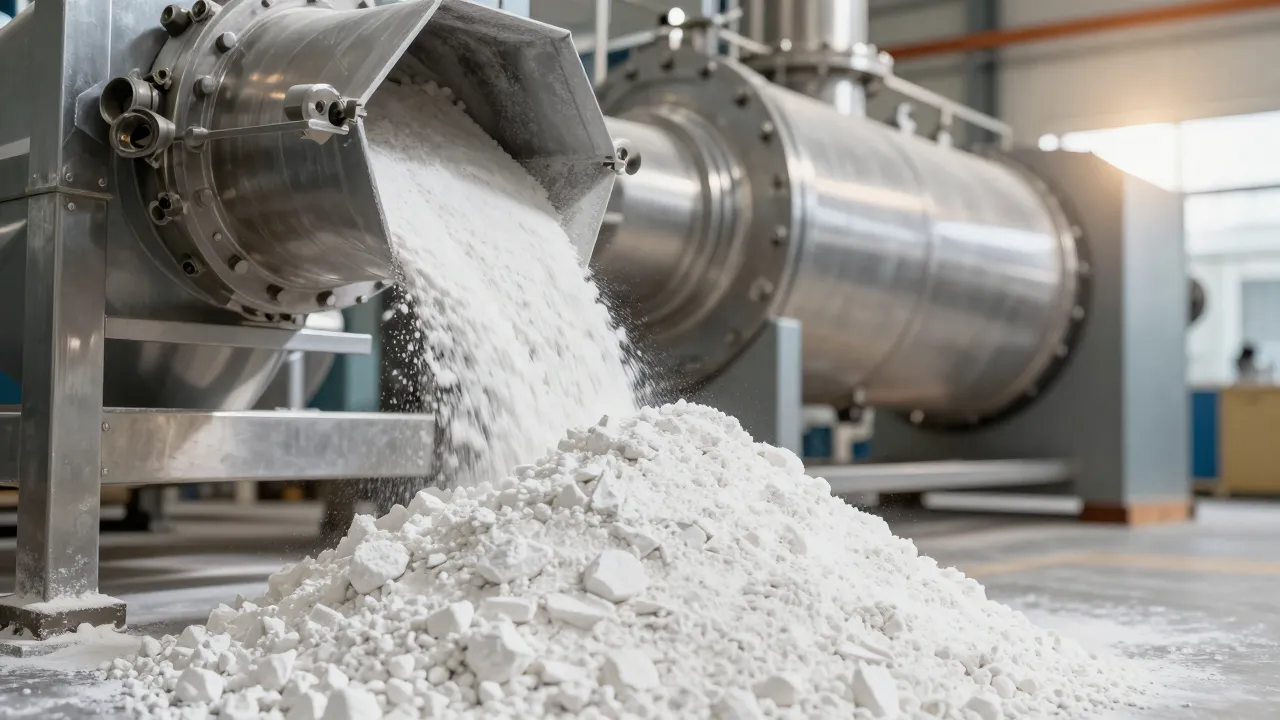
For refractory formulators, advanced ceramics engineers, and abrasive buyers, calcined alumina is one of the most versatile and widely specified industrial minerals. It sits between raw Bayer-process alumina and fused alumina products in both processing cost and performance — and understanding its grades is critical for writing accurate purchase specifications.
This guide explains what calcined alumina is, how it is produced, which technical specifications matter for B2B purchasing, where it is used, and how to evaluate suppliers for consistent quality.
What Is Calcined Alumina?
Calcined alumina is a high-purity aluminum oxide (α-Al₂O₃) produced by heating aluminum hydroxide (derived from the Bayer process) to temperatures between 1,100°C and 1,500°C. This calcination drives off chemically bound water and converts the alumina from transitional phases (gamma, theta) into the stable alpha-crystalline form — corundum.
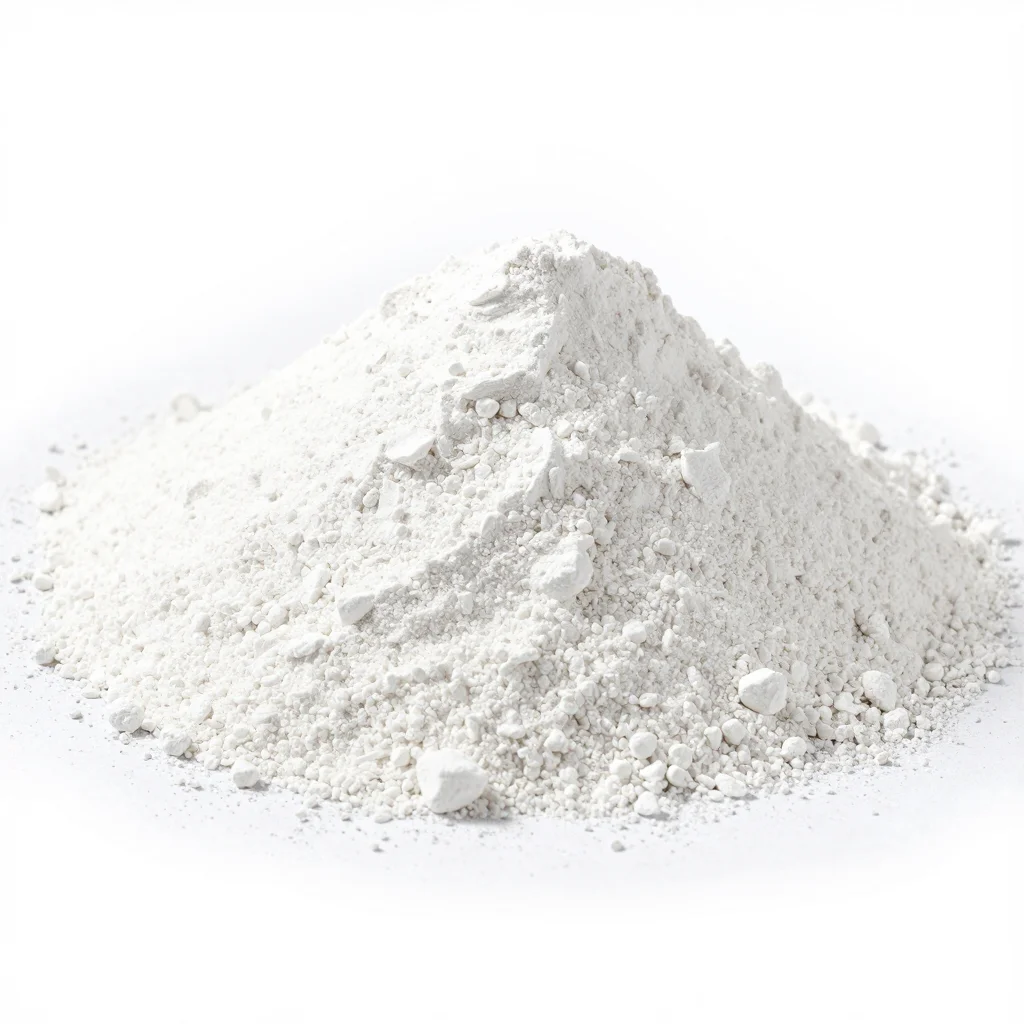
The result is a hard, chemically inert, thermally stable white powder with controllable particle size and morphology. Unlike fused aluminas, calcined alumina is not melted — it undergoes solid-state phase transformation, which preserves fine particle sizes and allows precise control over crystal size, surface area, and sodium content.
How Calcined Alumina Differs from Fused Aluminas
| Property | Calcined Alumina | White Fused Alumina | Brown Fused Alumina |
|---|---|---|---|
| Production | Thermal calcination (1,100–1,500°C) | Electric arc fusion (~2,050°C) | Electric arc fusion (~2,000°C) |
| Al₂O₃ purity | 99.0–99.8% | ≥99.5% | ≥95% |
| Typical form | Fine powder (sub-micron to ~100 μm) | Crushed grain (mesh sizes) | Crushed grain (mesh sizes) |
| Crystal size | 0.5–10 μm (controllable) | Large single crystals | Large polycrystalline |
| Primary use | Ceramics, refractories, polishing | Abrasives, blasting, refractories | Heavy grinding, blasting |
| Na₂O content | 0.05–0.40% (grade-dependent) | ≤0.05% | ≤0.1% |
The key distinction: calcined alumina is a powder product used as a raw material input, while fused aluminas are granular products used directly as abrasives or aggregates.
Production Process
- Bayer process: Bauxite ore is digested in sodium hydroxide to extract aluminum hydroxide (Al(OH)₃)
- Washing and classification: The aluminum hydroxide is washed to remove residual soda and classified by particle size
- Calcination: Al(OH)₃ is fed into a rotary kiln or flash calciner at 1,100–1,500°C. This drives off water (Al(OH)₃ → Al₂O₃ + 3H₂O) and converts the alumina to the alpha phase
- Milling and classification: The calcined product is ball-milled, jet-milled, or attrition-milled to achieve target particle size distributions
- Optional treatments: Acid washing to reduce Na₂O, surface coating for flow enhancement, and blending for custom specifications
The calcination temperature and holding time directly control the alpha-phase conversion percentage and crystal size — both critical for end-use performance.
Key Grades and Specifications
Calcined alumina is not a single product. It spans a range of grades defined by purity, crystal size, and particle size. Understanding these parameters is essential for correct specification.
Purity Grades
| Grade | Al₂O₃ (%) | Na₂O (%) | LOI (%) | Typical Application |
|---|---|---|---|---|
| Standard (normal soda) | ≥99.0 | 0.30–0.40 | ≤0.50 | General ceramics, refractories |
| Low soda | ≥99.3 | 0.05–0.10 | ≤0.30 | High-performance ceramics, spark plugs |
| Ultra-low soda | ≥99.5 | ≤0.03 | ≤0.15 | Electronic ceramics, catalysis |
| High purity | ≥99.8 | ≤0.01 | ≤0.10 | Sapphire growth, optical applications |
Na₂O content is the most critical specification for ceramics. Sodium acts as a flux in ceramic firing, promoting grain growth and reducing mechanical strength. For structural ceramics (alumina substrates, wear parts), low-soda grades (≤0.10% Na₂O) are standard. For refractories, normal soda grades are acceptable and more cost-effective.
Crystal Size
| Crystal Size | D50 (μm) | Surface Area (m²/g) | Application |
|---|---|---|---|
| Fine crystal | 0.5–1.0 | 3.0–8.0 | Polishing compounds, advanced ceramics |
| Medium crystal | 1.0–3.0 | 1.0–3.0 | Technical ceramics, refractory binders |
| Coarse crystal | 3.0–10.0 | 0.3–1.0 | Refractory aggregates, investment casting |
| Tabular (sintered) | 20–300 | <0.2 | Refractory aggregates (tabular alumina) |
Particle Size Distribution
Calcined alumina is milled to various particle size ranges:
| Classification | D50 Range | Milling Method |
|---|---|---|
| Sub-micron | 0.3–0.8 μm | Jet milling, attrition milling |
| Fine | 1–5 μm | Ball milling |
| Medium | 5–25 μm | Ball milling, hammer milling |
| Coarse | 25–100 μm | Light crushing, direct from kiln |
For polishing applications, sub-micron grades (D50 <1 μm) are required. For refractory castables, medium to coarse grades (D50 5–50 μm) provide the best packing density.
Major Applications
Refractories
Calcined alumina is a primary ingredient in high-alumina refractory systems:
- Refractory castables: Added as a fine matrix component (typically 10–30% of the mix) to improve slag resistance and high-temperature strength
- High-alumina bricks: Used as a binder and matrix filler to achieve Al₂O₃ content above 85%
- Refractory mortars and coatings: Provides chemical bonding and thermal stability
- Low-cement castables (LCC): Ultra-low-soda calcined alumina acts as a reactive matrix to improve flow and reduce water demand
The alpha-phase content directly affects refractory performance. Incompletely calcined material (containing gamma-phase) can cause volume instability at high temperatures. Always specify ≥95% alpha-phase conversion for refractory-grade material.
Technical Ceramics
Calcined alumina is the foundational raw material for alumina ceramics:
- Alumina substrates (90–99.6% Al₂O₃) for electronics and thick-film circuits
- Wear-resistant components: Seals, bearings, liners, and nozzles
- Spark plug insulators: Require low-soda, fine-crystal grades for high dielectric strength
- Bioceramics: High-purity grades for dental and orthopedic implants
- Cutting tools and wear plates: Sub-micron grades for maximum hardness and fine microstructure
Ceramic performance depends heavily on the calcined alumina’s particle size distribution and Na₂O content. Tighter specifications produce more consistent sintering behavior and mechanical properties.
Polishing and Lapping
Fine calcined alumina powders are widely used as polishing media:
- Optical lens polishing: Sub-micron alpha-alumina (0.3–0.5 μm D50) produces scratch-free surfaces
- Metallographic sample preparation: Graded alumina suspensions (0.05–1.0 μm) for final polishing stages
- Semiconductor wafer lapping: Colloidal alumina and fine calcined grades
- Stone and glass polishing: Medium-fine grades for surface finishing
The crystal hardness and uniform particle size of alpha-phase calcined alumina make it superior to other polishing media for achieving sub-nanometer surface roughness.
Catalysts and Catalyst Supports
High-purity calcined alumina with controlled surface area serves as:
- Catalyst supports for petrochemical refining (FCC catalysts, hydrodesulfurization)
- Adsorbent desiccants (though activated alumina is more common for this application)
- Automotive catalytic converter substrates
For catalyst applications, surface area and pore structure are critical specifications alongside purity.
Investment Casting
Coarse calcined alumina is used in investment casting shell systems:
- Primary slurry (face coat): Fine calcined alumina flour in colloidal silica binder
- Backup slurry: Coarser grades mixed with fused silica or zircon for shell strength
- Stucco: Coarse calcined alumina grains applied between slurry dips
The chemical inertness and thermal stability of calcined alumina prevent metal-mold reactions, particularly for reactive alloys (titanium, nickel-based superalloys).
Calcined Alumina vs Related Products
Calcined Alumina vs Tabular Alumina
Both are produced from the same Bayer-process feedstock, but the processing paths diverge significantly:
| Property | Calcined Alumina | Tabular Alumina |
|---|---|---|
| Calcination temp | 1,100–1,500°C | 1,800–1,900°C (sintering) |
| Crystal size | 0.5–10 μm | 20–300 μm (large tabular crystals) |
| Form | Fine powder | Granular (screened sizes) |
| Porosity | Low (powder) | Very low (≤5% apparent porosity) |
| Primary use | Ceramics, polishing, binders | Refractory aggregates |
Tabular alumina is essentially calcined alumina that has been further sintered at much higher temperatures to produce large, well-developed alpha-alumina crystals. For a detailed comparison, see our tabular alumina vs calcined alumina guide.
Calcined Alumina vs White Fused Alumina
| Property | Calcined Alumina | White Fused Alumina |
|---|---|---|
| Production | Thermal calcination | Electric arc fusion |
| Form | Powder | Crushed grain |
| Purity | 99.0–99.8% Al₂O₃ | ≥99.5% Al₂O₃ |
| Primary use | Ceramics, polishing, refractory matrix | Abrasives, blasting, refractory aggregate |
| Cost per ton | Lower | Higher (energy-intensive fusion) |
If you need fine powder for ceramic batching or polishing, calcined alumina is the correct choice. If you need hard, angular grains for abrasive applications, see our white fused alumina guide.
Calcined Alumina vs Activated Alumina
Activated alumina is produced by partially dehydrating aluminum hydroxide at lower temperatures (300–600°C), producing a highly porous, high-surface-area product (200–400 m²/g) used for adsorption, desiccation, and water treatment. Calcined alumina, by contrast, is fully converted to alpha-phase with very low surface area (0.3–8 m²/g) and is used for structural and chemical applications rather than adsorption.
Sourcing Considerations
Specification Checklist
When writing a calcined alumina purchase specification, include:
- Al₂O₃ minimum (typically ≥99.0% for standard; ≥99.5% for low-soda)
- Na₂O maximum (0.05–0.40% depending on grade)
- LOI (Loss on Ignition) (≤0.50% standard; ≤0.15% for ultra-low-soda)
- Alpha-phase content (≥90% standard; ≥95% for refractories)
- Particle size distribution (D10, D50, D90 values — not just a single D50)
- Crystal size (0.5–10 μm range, grade-dependent)
- Surface area (BET method, m²/g — critical for catalyst and polishing grades)
- Moisture content (≤0.5% standard)
Quality Verification
- Request per-lot Certificates of Analysis (COAs) with full chemical and physical data
- Verify alpha-phase content by X-ray diffraction (XRD) if critical for your application
- Test particle size distribution using laser diffraction — compare against supplier’s reported D50 and D90
- For ceramics, run a small-scale sintering trial to verify densification behavior matches your process
- Check bulk density consistency across lots — variations indicate processing instability
Regional Sourcing
China produces the majority of global calcined alumina supply, with major production in Shandong, Henan, and Guizhou provinces. Key considerations:
- Standard-grade availability: Chinese producers offer competitive pricing for normal-soda calcined alumina in volume
- Low-soda capability: Not all producers can reliably achieve Na₂O ≤0.05% — qualify suppliers carefully
- Consistency: Large-scale producers with in-house Bayer-process feedstock tend to show better lot-to-lot consistency
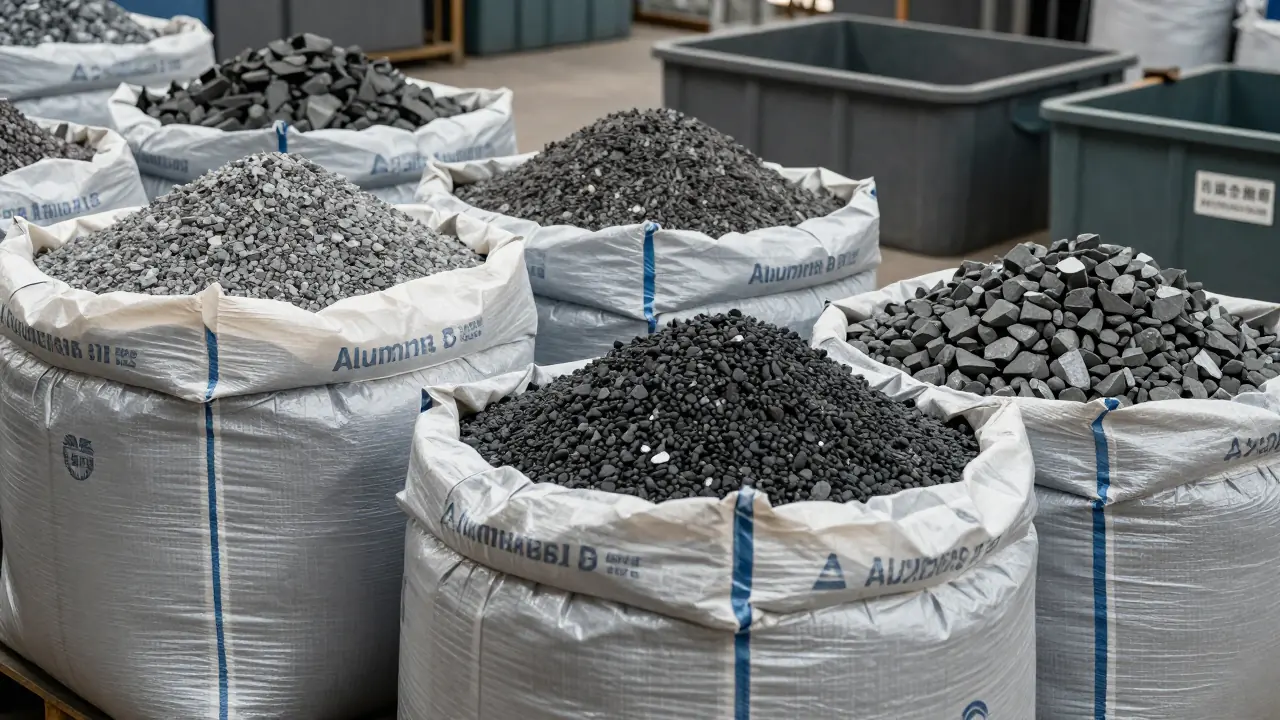
- Logistics: Bagged (25 kg or 1,000 kg jumbo bags) and bulk container shipping options; lead times of 2–4 weeks typical
Frequently Asked Questions
What is the difference between calcined alumina and alumina trihydrate?
Alumina trihydrate (ATH, or aluminum hydroxide) is the precursor to calcined alumina. ATH contains three molecules of water chemically bound to each Al₂O₃ molecule. Calcination at 1,100–1,500°C drives off this water and converts the material to alpha-alumina. ATH decomposes endothermically at ~200°C, releasing water vapor — it is used as a flame retardant. Calcined alumina is thermally stable and does not decompose.
Is calcined alumina the same as corundum?
Calcined alumina is composed of alpha-alumina (corundum) crystals, but in powder form. Natural corundum is a mineral found in igneous rocks as large crystals. Synthetic corundum (used in abrasives) is produced by fusion. Calcined alumina achieves the corundum crystal structure through solid-state phase transformation at lower temperatures than fusion, resulting in much finer crystal sizes.
What does LOI mean and why does it matter?
LOI (Loss on Ignition) measures the weight lost when a sample is heated to high temperature (typically 1,000–1,200°C). For calcined alumina, LOI reflects residual moisture, adsorbed water, and incomplete dehydroxylation. High LOI (>0.5%) indicates incomplete calcination, which can cause volume changes during high-temperature use. For refractory and ceramic applications, LOI should be ≤0.30%.
Can I use calcined alumina as an abrasive?
Calcined alumina powder is used for polishing and lapping applications where very fine, uniform particles are needed. However, for grinding wheels, blast media, and bonded abrasives, fused alumina (brown or white) is the standard choice because fusion produces larger, harder, more angular grains that resist fracture under mechanical load.
How should I store calcined alumina?
Store in a dry, covered area in sealed bags or containers. Calcined alumina is hygroscopic to varying degrees depending on surface area — fine grades can absorb atmospheric moisture, which increases LOI and may affect ceramic processing behavior. For critical applications, maintain storage conditions below 60% relative humidity and use material within 12 months of production.
Ready to Source Calcined Alumina?
Calcined alumina provides the purity, crystal control, and particle size precision that ceramics, refractories, and polishing applications demand. The specifications above give you a clear framework for grade selection and supplier qualification.
Request a calcined alumina quote — we supply standard, low-soda, and ultra-low-soda grades with full COAs, custom particle size distributions, and consistent quality across production lots.